


Building a high-performing team doesn't require battling local talent shortages or paying premium domestic salaries. When you hire in South and Central America, an incredible pool of skilled tech, operational, and creative professionals is ready to help your business scale. Did you know that 72% of U.S. companies hiring remote talent in Latin America cite time zone compatibility as a major factor in their success? You get real-time collaboration during normal working hours, minus the late-night calls.
This guide walks you through every phase of expanding your nearshore workforce. You will discover key talent hubs across the region, navigate cross-border compliance without a headache, and learn how to recruit, onboard, and retain elite professionals. By the time you finish reading, you will have a clear, actionable playbook to build a remote team that delivers results without inflating your budget.
Why Should You Hire in South and Central America?
1. Synchronous Work Hours and Real-Time Communication
Working with teams across traditional offshore hubs often means delayed feedback, midnight status updates, and lost momentum. South and Central American talent operates within your daily business hours, spanning Eastern, Central, and Mountain time zones.
According to Deloitte, 72% of U.S. companies hiring remote talent in Latin America cite time zone compatibility as a primary driver of their success. Your team can conduct standups, resolve critical bugs, and complete sprint reviews together during normal office hours.
2. Significant Payroll Optimization Without Standard Drops
Domestic tech and operational salaries continue to stretch company budgets. Hiring across South and Central America provides significant financial relief while preserving quality.
According to Industry Reports, U.S. businesses save between $35,000 and $64,000 annually per hire when recruiting in Latin America compared to equivalent domestic roles, representing a 30% to 70% reduction in total compensation costs. You can redirect those savings into product development, marketing, or business expansion.
3. Massive Talent Depth Driven by STEM Investments
The region is home to established tech hubs and a rapidly expanding workforce. Local governments and private institutions have spent over a decade building strong university pipelines focused on computer science, engineering, and digital skills.
According to Athyna, Latin America now boasts over 2.6 million active tech professionals, supported by more than 400 universities that graduate over 220,000 new STEM students every single year. You can find experienced full-stack developers, cloud architects, data scientists, and operations managers ready to integrate into your existing systems.
4. Cultural Alignment and High Language Fluency
Cross-border collaboration fails when communication breaks down. Professionals across Central and South America share similar business practices, work ethics, and agile management frameworks with North American organizations.
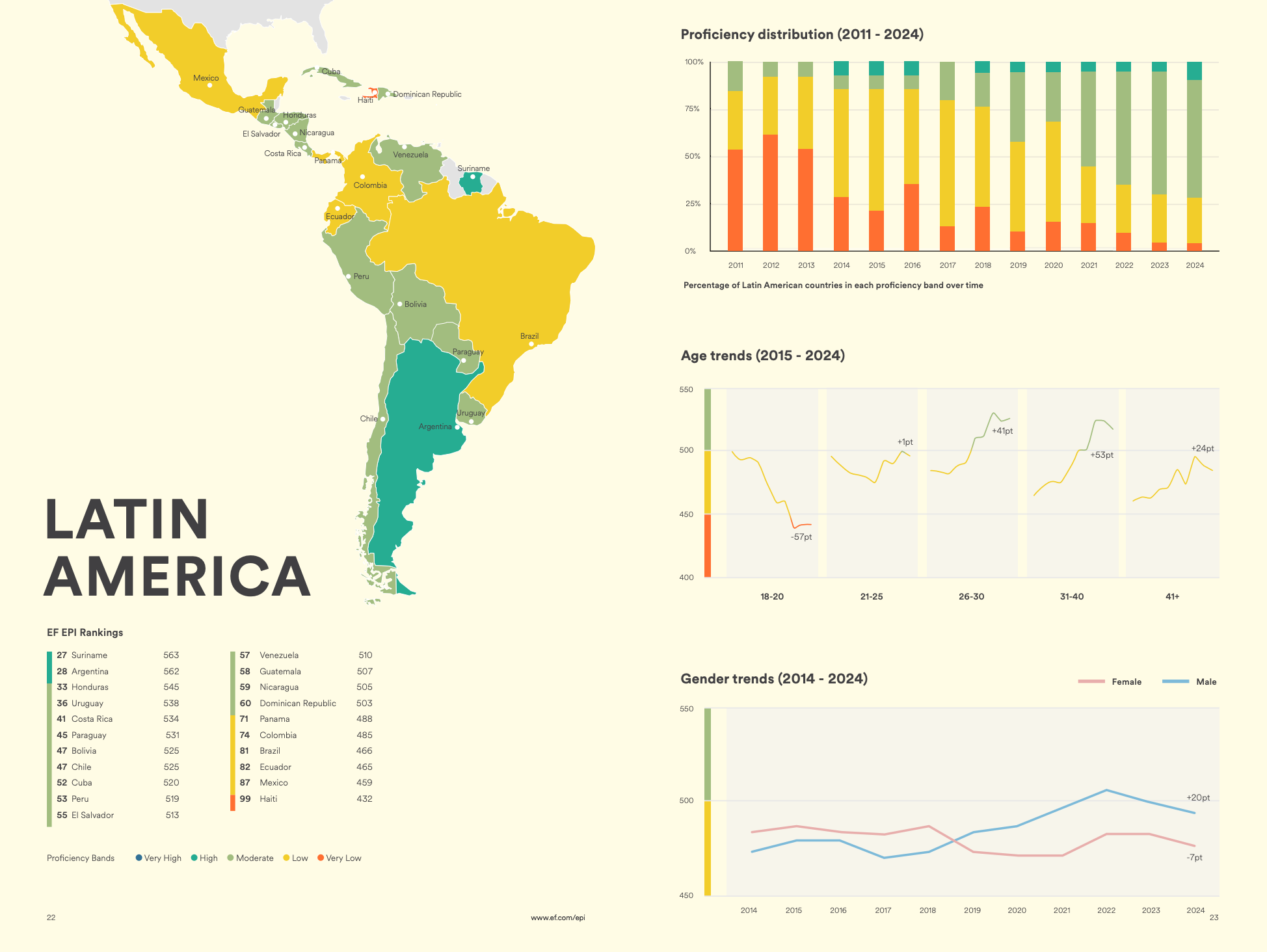
According to the EF English Proficiency Index, countries like Argentina rank in the highest proficiency band globally, while tech hubs in Costa Rica, Mexico, and Colombia maintain large populations of fully bilingual professionals. Your remote team members can comfortably lead client calls, document code, and participate in cross-functional planning sessions.
What It Takes To Hire in South and Central America
Setting up a seamless pipeline in Latin America requires more than posting a job description online and sending wire transfers. Expanding across South and Central America involves distinct legal structures, specific compensation strategies, and localized sourcing networks.
Here is what you must navigate to build a fully compliant, high-performing nearshore team:
Choosing Between Independent Contractor Relationships and EOR Models
Establishing your hiring structure early dictates how fast you scale and your overall regulatory risk. The truth is, you essentially have two main legal avenues when you hire in South and Central America.
Direct contractor agreements work well for flexible project-based scope, but misclassifying a full-time worker as an independent contractor creates severe legal exposure. Local labor courts in countries like Brazil, Mexico, and Colombia impose heavy fines, backdated benefits, and tax penalties on foreign companies that enforce fixed working hours or exclusive duties on contractor status.
Utilizing an Employer of Record (EOR) lets you hire full-time employees without forming local legal entities. The EOR handles local payroll, statutory tax withholdings, and mandatory benefits, allowing you to focus strictly on day-to-day work output.
Accounting for Mandatory Local Benefits and the 13th-Month Salary
Compensation in LATAM extends far beyond base pay. Most nations enforce strict statutory benefits that significantly impact your annual labor budgeting.
According to global HR and labor compliance data, statutory 13th-month salaries and in countries like Peru or Ecuador, 14th-month bonuses are mandatory legal requirements across almost all of Latin America. In Mexico, this is known as the Aguinaldo, while Argentina enforces the Sueldo Anual Complementario (SAC).
You must also budget for country-specific mandatory perks:
- Paid Time Off: Statutory annual leave varies drastically, ranging from 12 days in Mexico to 30 consecutive calendar days in Brazil and Peru.
- Severance and Notice Periods: Dismissals without just cause often require statutory severance payouts tied directly to tenure length.
- Healthcare and Social Security: Employers must contribute to national social security systems, typically adding 15% to 30% on top of gross salary.
Managing Multi-Currency Payroll and Local FX Expectations
Payment logistics across LATAM require careful currency management to attract and keep top talent.
According to Deel's State of Global Hiring Report, over 85% of Latin American tech candidates prefer earning compensation pegged to USD or held in hard foreign currency to hedge against local inflation. High-inflation environments like Argentina make USD-denominated contracts or stablecoin payout integrations major hiring advantages.
Your cross-border payment rails must run smoothly. Using international wire services, local banking networks, or specialized global payroll platforms prevents processing delays, minimizes FX conversion fees, and ensures workers receive their exact net pay on time.
Sourcing Candidates Through Localized LATAM Talent Networks
Generic Western job boards like LinkedIn capture only a fraction of the qualified candidates you can hire in South and Central America. You must tap into regional talent hubs and localized channels to find elite talent fast.
Leverage developer communities such as Get on Board and Workana, as well as localized Slack groups, tech bootcamps, and regional university networks. Partnering with specialized nearshore recruitment firms or using regional sourcing databases gives you direct access to pre-screened, English-fluent candidates who are actively looking for remote opportunities with U.S. organizations.
How to Build a Remote Team From Scratch
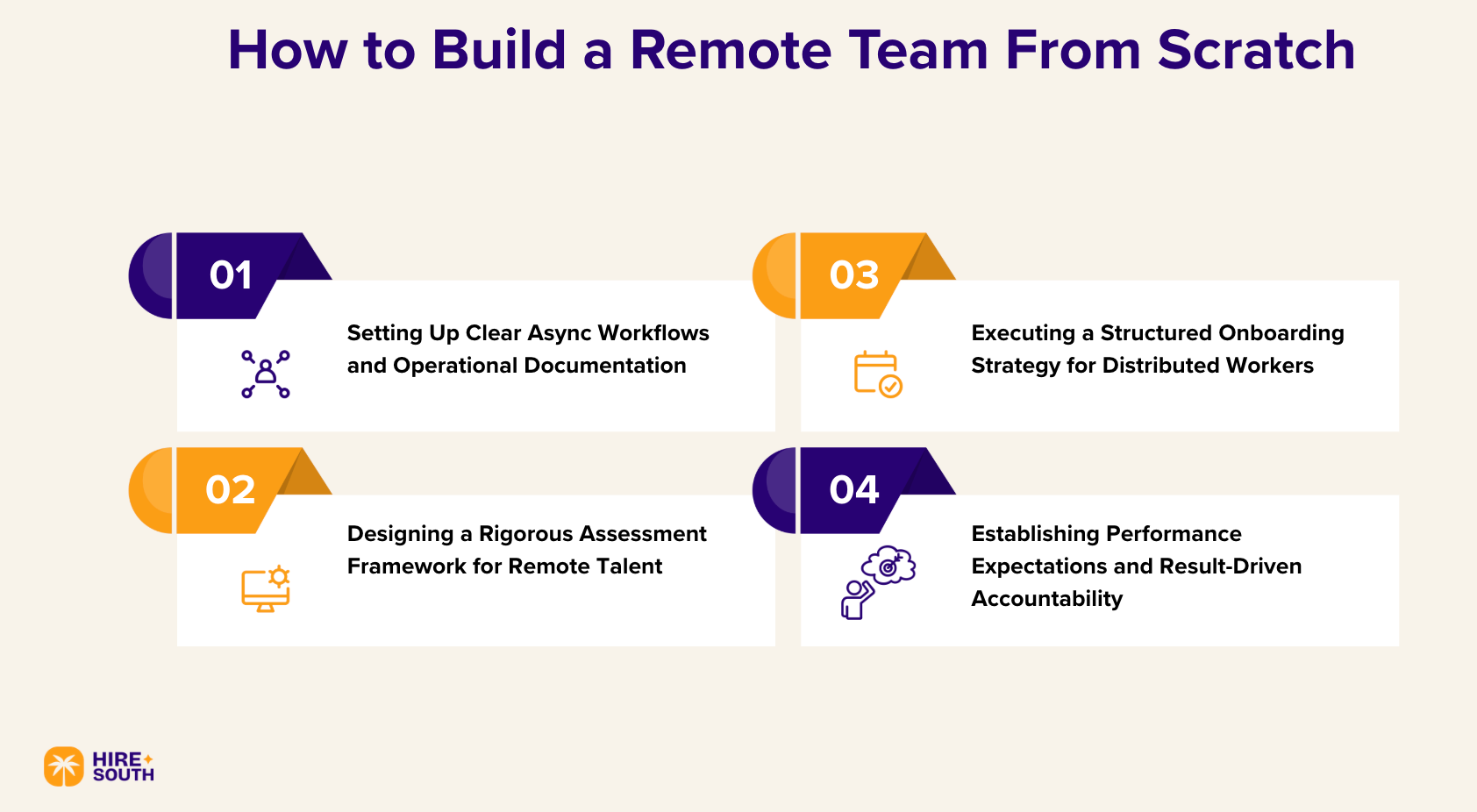
1. Setting Up Clear Async Workflows and Operational Documentation
A distributed workforce cannot function if every task requires a live conversation. You must establish strong asynchronous communication habits before making your first hire.
Document your processes, project standards, and system architectures in a centralized company knowledge base. Define clear communication rules so your team knows when to post an update in Slack, when to update a ticket in Jira, and when an issue actually warrants a synchronous video meeting.
According to the Stanford University Remote Work Study, workers in structured remote environments experience a 13% performance boost compared to traditional office employees, largely due to fewer workday interruptions and longer blocks of deep focus.
2. Designing a Rigorous Assessment Framework for Remote Talent
Evaluating candidates for remote roles requires assessing self-management, written clarity, and practical skills alongside technical capabilities. Resumes alone do not show how someone handles real-world ambiguity or independent troubleshooting.
According to FlexJobs' Remote Work Index, over 65% of remote job postings specifically target experienced professionals who can operate autonomously without constant oversight.
Structure your interview pipeline around practical exercises:
- Paid Take-Home Projects: Assign a small, real-world task that mimics daily responsibilities and cap the required time at three to four hours.
- Code or Portfolio Reviews: Walk through past work together to evaluate how candidates explain their technical decisions and take feedback.
- Asynchronous Communication Tests: Pay attention to how clearly candidates write responses during the application process, as written communication forms the backbone of remote work.
3. Executing a Structured Onboarding Strategy for Distributed Workers
A chaotic onboarding experience leads to early disengagement and turnover. Your onboarding playbook must guide new hires from day one through their first 90 days. This will make it much easier to hire in South and Central America if you’re looking for long-term LATAM talent.
Prepare hardware, software accounts, and access permissions before a new team member's start date. Assign a peer mentor or buddy to help them navigate team norms, answer minor questions, and integrate socially without feeling isolated.
According to Scion Staffing, companies with structured onboarding programs see an 82% increase in new hire retention and a 70% boost in overall productivity. Set explicit 30, 60, and 90-day targets so new hires understand what success looks like in their specific role.
4. Establishing Performance Expectations and Result-Driven Accountability
Managing a remote team requires shifting your leadership mindset from hours logged at a desk to tangible outcomes delivered. Key performance indicators, or KPIs, give your staff full clarity on what they need to achieve while giving you visibility into progress.
Run weekly sprint check-ins and monthly performance reviews to track outputs, unblock bottlenecks, and provide continuous feedback. When team members know their exact goals and have the autonomy to execute them, your distributed operations run smoothly across all regions.
Scaling Your Remote Workforce When You Hire in South and Central America
Expanding from a few individual nearshore hires to a full-scale remote department requires a systematic operational framework. If you want to hire in South and Central America at scale, you need strategies that preserve code quality, protect your workplace culture, and maintain high retention rates across borders.
Transitioning From Individual Contractors to Autonomous Nearshore Squads:
Placing individual developers into fragmented domestic teams often creates communication friction and isolated workflows. Transitioning toward autonomous, cross-functional squads accelerates project delivery and strengthens team cohesion.
According to Scale Army's Nearshore Hiring Report, businesses leveraging agile nearshore squads report faster feature deployment and higher campaign responsiveness compared to managing scattered individual contractors, largely due to shared working hours and localized team dynamics.
Structuring your remote units with clear operational leadership makes a massive difference. You should assign a senior LATAM technical lead to manage daily code reviews, unblock team members, and maintain technical standards. Combine senior architects, mid-level developers, and quality assurance specialists within the same regional squad to handle complete feature lifecycles smoothly. Finally, connect nearshore team leads directly with your product managers so operational priorities remain perfectly synchronized.
Standardizing Security Protocols and Device Management:
Scaling a distributed workforce increases your potential exposure to data security vulnerabilities. Protecting sensitive customer data and intellectual property requires strict device management policies and standardized access controls across every country you operate in.
According to Deel's Global Hiring Report, over 80% of enterprise organizations hiring internationally deploy centralized device management software and hardware compliance frameworks to prevent cross-border data breaches.
Implementing non-negotiable remote security standards from day one protects your business assets. Mandate multi-factor authentication, enterprise virtual private networks, and role-based access permissions for all company software. Use global device management platforms to ship pre-configured, encrypted laptops directly to new hires in South and Central America. You must also ensure your remote operations comply with international security benchmarks like SOC 2, HIPAA, or GDPR depending on your specific industry regulations.
Protecting Retention Rates by Building Clear Career Progression Routes:
High employee turnover destroys momentum and increases re-hiring costs. Keeping top talent in Latin America requires more than matching competitive salaries, because you must offer clear paths for professional development.
According to a study published by the International Economic Association, annual labor turnover in major Latin American markets ranges between 24% and 44%, primarily driven by workers seeking better stability, higher productivity environments, and structured career growth.
Retaining your best performers comes down to creating clear advancement structures. Map out technical and managerial progression paths so individual contributors understand how to reach senior or leadership roles within your organization. Offer annual stipends for cloud certifications, English language refinements, and technical workshops to foster continuous improvement. Conduct quarterly compensation reviews as well to keep pay aligned with local market rates and currency shifts, which prevents competitors from poaching your senior staff.
Measuring Nearshore Productivity with Outcome-Based Metrics:
Managing a scaled nearshore team requires tracking concrete business outcomes rather than watching hours spent online. Outcome-based tracking keeps your workforce accountable while granting them the autonomy necessary to produce high-quality work.
According to McKinsey, technology organizations that focus on clear output metrics and automated tracking capabilities build far more scalable operational units than those relying on manual oversight.
Focusing your management cadence on key performance indicators gives you complete operational visibility. Track sprint velocity and completion rates to measure how consistently your nearshore squads deliver production-ready code. Monitor test coverage, post-release bug reports, and peer review feedback to maintain rigorous quality standards. Lastly, gather anonymous employee feedback quarterly to identify operational bottlenecks, workplace dissatisfaction, or early signs of burnout before turnover occurs.
Ready to Hire in South and Central America?
Building a nearshore workforce across South and Central America gives growing organizations a distinct competitive edge, combining real-time collaboration with substantial budget savings. On average, companies save between $35,000 and $64,000 annually per hire when expanding into Latin America, all while maintaining high standards of technical output and cultural alignment. Getting these results, however, requires navigating complex local labor laws, multi-currency payroll, and rigorous candidate vetting across diverse markets.
At Hire South, we streamline every phase of your nearshore expansion. We connect your business directly with pre-vetted, English-fluent professionals across Latin America who work in your time zone. Our team handles candidate sourcing, multi-stage skill evaluations, local compliance, and cross-border payroll logistics. This allows you to scale your workforce quickly without taking on massive operational overhead. Whether you need individual specialized hires or full cross-functional units, we deliver the talent you need to accelerate growth while maximizing your ROI. Contact us to book a free strategy call today!

.jpg)