


Great tech talent is hard to find, but it’s even harder to keep. The moment a software engineer gets bored, burned out, or bogged down by legacy code, they start looking at the door. So how do you improve tech talent stability?
Let’s face it, replacing them isn't cheap. According to a report by Charm Growth, 95% of human resources leaders admit that burnout is actively sabotaging workplace retention. If you don't build an environment where developers actually want to stay, you'll lose them to competitors who will.
This guide breaks down actionable employee retention strategies built specifically for engineering cultures. You will discover how to eliminate technical debt to boost developer satisfaction, structure modern compensation frameworks, and upgrade your management styles. Let’s dive into the core talent retention tips you need to build a stable, high-performing tech team.
Why It Is Important To Constantly Improve Talent Retention
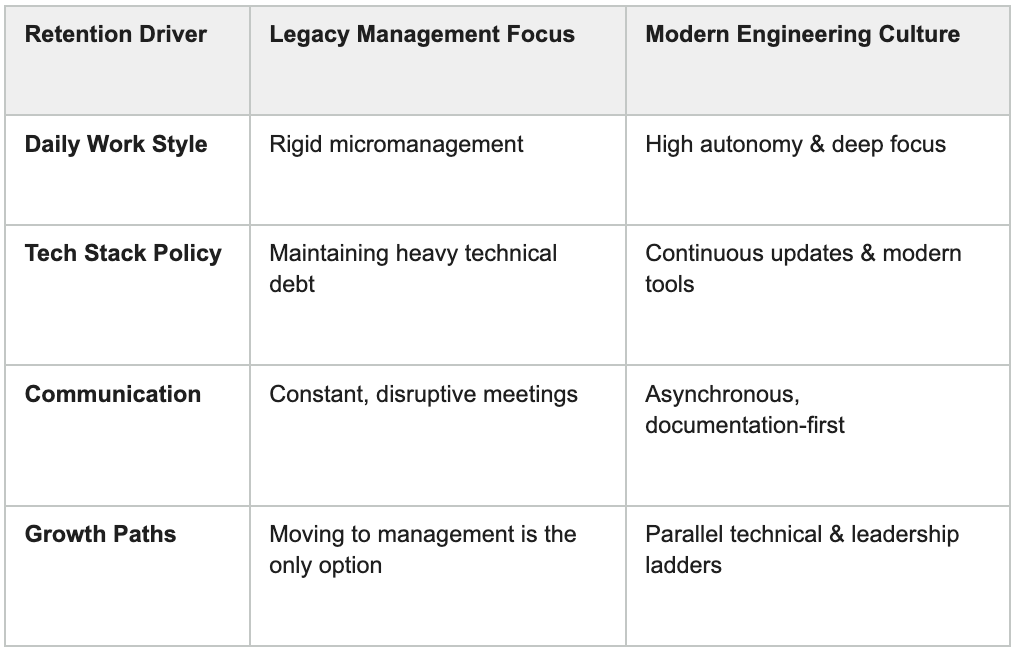
Complacency kills technical momentum. If you think your talent retention strategies are a set-it-and-forget-it initiative, your competitors are already interviewing your best developers. Top-tier software engineers do not leave organizations overnight, they disengage gradually when leadership stops actively investing in their day-to-day work experience.
Constantly iterating on your talent retention tips is the only way to prevent this silent drain. According to data published by Hirex, a staggering 71% of employees note they would be far less likely to quit their jobs if they were recognized more frequently by leadership. When you stop evolving your recognition and cultural frameworks, retention metrics plummet.
Continuous optimization directly impacts your bottom line. According to a 2026 tech workforce study by Ravio, the engineering sector managed to maintain a flat 12% attrition rate year-over-year, which represents the strongest stability across all corporate functions. However, maintaining this baseline requires active, ongoing adjustments to market demands. If your approach to retaining tech talent stagnates for even a single quarter, that stability vanishes.
Mitigating the High Financial Impact of Engineering Turnover.
Every time a senior developer walks out the door, your business takes a massive financial hit. The cost of replacing specialized technical talent involves recruitment fees, onboarding hours, and months of lost productivity. By constantly refining your employee retention strategies, you protect your operational budget from these predictable, recurring expenses.
Preserving Proprietary Institutional Knowledge and System Mastery.
Codebases are complex ecosystems. When engineers leave, they take crucial context, system architecture understanding, and undocumented problem-solving history with them. Continuous retention efforts ensure this vital institutional knowledge stays within your teams, reducing the time your remaining developers spend deciphering legacy code.
Maintaining Team Velocity and Product Roadmap Stability.
High turnover creates a devastating ripple effect across agile workflows. When a team loses a core contributor, product velocity stalls, deadlines slip, and the remaining engineers must absorb the extra workload. Constantly optimizing your workplace environment keeps your development cycles predictable and prevents the burnout that triggers further resignations.
What Factors Matter The Most For Retaining Tech Talent
Retaining tech talent takes far more than ping-pong tables or superficial office perks. Engineers want a workplace environment that respects their time, supports their health, and maps out a definitive path forward. When you look at the root causes of developer turnover, the data shows that structural stability and clear career development are non-negotiable baselines.
According to the LinkedIn Workplace Learning Report, companies that actively promote internal career development experience a massive 67% confidence level in their ability to keep their qualified employees, compared to just 50% for organizations that ignore continuous training. If your tech stack is stagnating and your development paths are invisible, your top-tier engineers will quickly find an employer who offers those growth opportunities.
1. Prioritizing Workplace Balance and Personal Well-Being
If you expect your software developers to work late hours constantly and tackle continuous fire drills, they will look for the exit door. Burnout is the absolute number one enemy of technical talent retention. According to a nationally representative study of over 10,000 employees in the United States published by Gallup, work-life balance and personal well-being rank as the absolute most essential considerations when choosing a new job for 59% of respondents. Providing predictable development sprints, flexible work options, and asynchronous schedules allows engineers to step away from the keyboard and rest, keeping their minds sharp and their tenure long.
2. Offering Clear, Step-by-Step Internal Mobility Paths
Technical talent leaves the moment they feel they have hit a ceiling in their current role. If a developer cannot see what their job looks like in two years, they will build a future somewhere else. According to mobility data compiled by the LinkedIn Workplace Learning Report, employees who have transitioned internally within an organization have a 75% probability of staying long-term, compared to a mere 56% retention rate for those left stuck in the exact same role. Building clear engineering career ladders allows developers to move up without needing to move out.
3. Investing in Continuous Upskilling Programs and New Technology
Engineers are naturally driven by a desire to build, solve complex problems, and learn new technical skills. If you force your engineering teams to maintain ancient, legacy systems while refusing to adopt modern tools, their technical skills will degrade, and their job satisfaction will evaporate. According to research from The HR Source, preventable turnover driven by career stagnation and weak management support accounts for a massive 63% of all corporate exits. By providing structured learning budgets, dedicated time for technical experimentation, and direct pathways to master advanced skills like artificial intelligence data architecture, you keep your developers highly engaged and deeply invested in your engineering ecosystem.
Effective Strategies for Improving Employee Retention
Building a workplace that professionals respect requires a deliberate shift from traditional management to a culture of high trust. When you look at why people walk away from their jobs, the issue is rarely a lack of office perks. Instead, it comes down to structural disconnects in compensation, day-to-day management, and onboarding workflows.
According to data compiled by StaffCost, overall US voluntary turnover climbed to 23.4% in 2026, up from 22.7% the previous year. This rising trend proves that ignoring the baseline needs of your workforce carries immediate stability risks. To protect your teams from systemic churn, you must implement concrete, evidence-backed changes across the entire employee lifecycle.
1. Establishing Market Equity with Mid-Year Compensation Audits
Waiting for an annual review cycle to adjust salaries guarantees you will lose top performers to external recruiters. If you pay your technical or operational teams below market rates, their departure likelihood triples. The most reliable sweet spot for retention is targeting the 55th percentile of your regional market. According to a 2026 tech workforce study by Ravio, tech companies paying above the market average, specifically targeting above the 55th percentile, experience the lowest share of employee departures. Reviewing your compensation structures twice per year ensures you stay ahead of fast-moving market trends and prevents your staff from feeling underappreciated.
2. Securing the Crucial First Quarter with Structured Onboarding Plans
Retention issues often masquerade as hiring issues, but the real breakdown occurs during the earliest phases of employment. If a new hire spends their first month struggling with unclear expectations, fragmented documentation, or unassigned guidance, they will disengage immediately. According to onboarding research published by StaffCost, a significant 20% of all voluntary corporate turnover happens within the first 45 days of employment. Shifting away from ad-hoc onboarding to a documented 30-60-90 day roadmap with clear weekly milestones ensures that new hires build confidence, absorb team culture, and see a viable path to early success.
3. Defusing Early Attrition Risks Using Milestone Stay Interviews
Exit interviews only tell you why a great employee has already checked out, making them entirely reactive tools. To capture and fix structural issues before they result in a resignation letter, you must speak with your people while they are still actively contributing. According to historical workplace data compiled by Turnozo, the 6-month and 2-year tenure marks carry the highest overall departure risk across most modern corporate functions. Scheduling structured, 15-minute stay interviews at these exact milestones allows you to ask targeted questions about work-life balance, management roadblocks, and career growth, reducing voluntary attrition at these critical thresholds by up to 28%.
4. Mitigating Burnout Through Intentional Flexibility and Core Hours
Forcing teams into rigid, counterproductive schedules degrades mental clarity and drives high-performing talent toward flexible competitors. True modern flexibility means moving past superficial hybrid policies and establishing sustainable deep-work boundaries. According to the 2026 State of the Global Workplace report by Gallup, global employee engagement dropped to just 20%, a systemic decline that highlights the profound impact of workplace stress. By implementing structured asynchronous communication, reducing unnecessary meetings, and respecting personal boundaries, you lower the daily stress levels that directly trigger unexpected resignations.
Ready To Improve Tech Talent Stability By Hiring LATAM Developers?
Building a stable, high-performing engineering team is an ongoing commitment to cultural alignment and proactive leadership. When you actively eliminate friction points like technical debt and uncompetitive compensation, you protect your product velocity and retain your top-tier contributors.
If local talent shortages or skyrocketing domestic costs make stabilizing your technical workforce difficult, We, at Hire South can help you scale effectively. We connect growing businesses with the top 0.5% of vetted, bilingual professionals in Latin America for around 30% to 40% less than the cost of local full-time hires. By matching you with pre-screened technical experts who work directly in your time zone, we handle compliance, global payroll, and recruitment headaches so you can focus on building great products with a highly stable, integrated team. If you are ready to get started, make sure to contact us today!