


The landscape of work in Latin America has shifted for good. You no longer need to navigate a grueling commute in São Paulo or Mexico City to land a high-impact career. Instead, the global talent war has turned its eyes toward the region, creating a massive surge in remote jobs demand for professionals who can deliver results from their home offices.
The numbers back up this shift. According to Deel’s Global Recruitment Report, Latin America remains the fastest-growing region for international hiring, with companies in the U.S. and Europe aggressively seeking out local talent to bridge time zones.
This article breaks down the top remote jobs in LATAM that are currently paying a premium. You will explore the most popular remote jobs in tech, sales, and operations, while identifying which specific roles are seeing the highest growth for remote jobs in LATAM. You will also learn how to position yourself for the most demanding remote jobs available today. Whether you are a seasoned executive or a rising specialist, the opportunities are there. It is time to see where your skills fit in the world of LATAM remote jobs on demand.
The Current Landscape of Remote Jobs Demand
The market for remote work in Latin America has transitioned from a temporary trend into a permanent pillar of the global economy. You are witnessing a "perfect storm" of high-speed internet expansion, a maturing tech ecosystem, and North American companies seeking to escape the logistical headaches of offshoring to distant time zones. The remote jobs demand in the region is no longer just about finding lower-cost labor; it is about strategic integration.
According to the Inter-American Development Bank (IDB), online job postings in the region have seen a massive pivot toward knowledge-intensive sectors, with data analysis, professional services, and finance leading the charge into 2026. Companies are prioritizing "nearshoring" because it allows for real-time collaboration. When a team in New York can jump on a Zoom call with a developer in Buenos Aires or a project manager in Bogotá without anyone waking up at 3:00 AM, productivity skyrockets.
A Surge in Cross-Border Hiring Growth:
The data shows that international firms are hiring in LATAM faster than ever. According to Deel’s 2026 Global Hiring Report, Latin America remains one of the top regions for cross-border recruitment, particularly for specialized roles that support revenue growth and product development. While software development remains the heavyweight champion of popular remote jobs, there is a noticeable diversification. You are now seeing an explosion in demand for "AI Trainers" and "Specialist Subject Matter Experts" who help refine machine learning models in local languages and contexts.
The Shift Toward Hybrid and "Flex-First" Models:
While the world discusses "Return to Office" mandates, the LATAM reality is increasingly hybrid. According to Pumble’s 2026 Remote Work Statistics, roughly 75% of employees in the region engaged in some form of remote work over the last year. However, the market is becoming more discerning.
Workers are now prioritizing flexibility over almost any other perk. In fact, according to Vena Solutions, 70% of professionals rank remote work as a top priority when considering a new role, and 40% would actively seek new opportunities if forced back to a physical office full-time. This leverage means you are operating in a candidate-driven market for high-skill positions.
Economic Resilience and Currency Incentives:
For a professional in LATAM, the appeal of LATAM remote jobs on demand often stems from economic stability. Many international contracts are pegged to the US Dollar or Euro, providing a powerful hedge against local inflation. According to Raconteur, there has been a significant "currency-hopping" trend where contractors in countries with volatile economies specifically target global roles to protect their purchasing power.
Popular Remote Jobs for Latin American Professionals
The market has matured significantly since the early days of basic data entry. Today, you are looking at a sophisticated landscape where specialized skills in technology, creative strategy, and high-level operations dominate. Companies in North America and Europe are no longer just hiring for "tasks", they are hiring for "impact."
The shift is massive. According to Deel’s 2026 State of Global Hiring Report, there has been a 35% year-over-year increase in contracts for non-tech roles in LATAM, proving that the "remote office" now spans every department from HR to Legal.
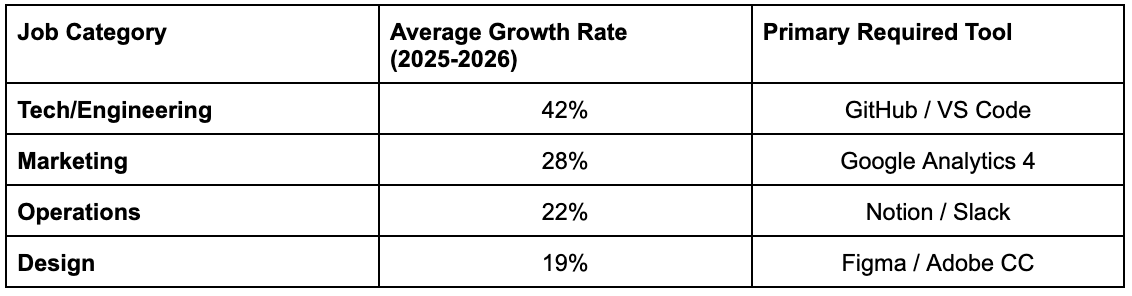
1. Software Development and Full-Stack Engineering
Coding remains the gold standard for popular remote jobs in the region. You will find that Python, JavaScript, and Ruby on Rails are the most requested languages. According to Stack Overflow’s 2025 Developer Survey, Latin American developers are increasingly recognized for their proficiency in cloud-native technologies, making them top targets for Silicon Valley startups.
Because the time zone alignment with the U.S. is nearly perfect, you can participate in "sprints" and "stand-ups" in real-time. This proximity has turned countries like Colombia and Argentina into global coding hubs.
2. Digital Marketing and Growth Hacking
If you have a knack for data-driven storytelling, digital marketing is a booming sector for LATAM remote jobs. Companies need experts who understand both the technical side of SEO and the cultural nuances of diverse markets. According to Statista, digital advertising spend in Latin America is projected to reach $15.6 billion by the end of 2026, creating a huge vacuum for skilled remote managers.
Roles in this category often include:
- Performance Marketing Specialists
- SEO Strategists
- Content Lifecycle Managers
- Social Media Analysts
3. Customer Success and Experience (CX)
This isn't your grandfather’s call center work. Modern demanding remote jobs in CX require you to manage high-value accounts and ensure long-term client retention. According to Zendesk’s CX Trends Report, 70% of consumers expect a seamless, personalized experience, which has led global firms to hire bilingual LATAM professionals who possess high emotional intelligence and problem-solving skills.
You aren't just answering phones; you are using CRM tools like Salesforce and HubSpot to track the entire customer journey.
4. Virtual Assistance and Executive Support
The "Executive Assistant" role has gone digital and global. High-level executives in the U.S. and UK are increasingly looking for "right-hand" support in LATAM to manage their schedules, travel, and basic operations. According to Belay, the demand for virtual executive assistants has grown by 20% annually, as business leaders realize they can get top-tier administrative talent at a fraction of the cost of a local hire in San Francisco or London.
5. Project Management and Operations
As remote teams grow, someone has to keep the gears turning. Project management has become one of the most in-demand remote jobs in LATAM because it requires a mix of soft skills and technical tool knowledge. You need to be proficient in Jira, Asana, or Monday.com. According to the Project Management Institute (PMI), the global economy will need 25 million new project professionals by 2030, and a significant portion of that talent is expected to come from emerging markets like Brazil and Mexico.
6. Creative Direction and Graphic Design
The "Creator Economy" is fueling a surge in demand for visual storytellers. Whether it is motion graphics for TikTok or high-end UI/UX design for new apps, Latin American creatives are winning. According to Adobe’s Future of Creativity study, 1 in 4 people are now contributing to the creator economy, and companies are outsourcing this high-level creative work to remote LATAM talent to diversify their visual perspective.
Where to Find the Best Remote Jobs in LATAM
Finding high-quality remote jobs in LATAM requires a shift in strategy. You cannot simply rely on local classifieds if you want to tap into the global market. The competition is fierce, but the landscape of platforms has expanded to include specialized marketplaces that cater specifically to the "nearshoring" boom. According to Deel’s 2026 Global Hiring Report, the number of companies using specialized international payroll platforms to hire in Latin America has increased by 35% year-over-year, indicating that the jobs are there, if you know where to look.
Leveraging Global Remote-First Job Boards.
To find the most popular remote jobs, you should start with platforms that vet employers as strictly as they vet candidates. Sites like We Work Remotely and FlexJobs are essential because they focus on long-term, high-trust roles rather than one-off gigs. According to Crossover, these platforms currently host over 100,000 active listings across 50 categories, with a significant portion explicitly welcoming applicants from South and Central America to take advantage of time zone alignment.
Niche Marketplaces for LATAM Tech and Design.
If you are in a specialized field, general boards might feel too crowded. For developers and engineers, platforms like Turing and TopTal use AI-driven matching to connect the top 1% of talent with U.S.-based firms. According to Jobbers, these elite networks are increasingly shifting their focus toward LATAM because of the high density of "Senior" and "Architect" level talent in hubs like Guadalajara and Medellín. For those in creative or marketing sectors, Working Nomads currently lists over 30,000 remote opportunities, many of which are tagged specifically for Latin American time zones.
Mastering LinkedIn’s "Hidden" Job Market.
Most professionals apply through the "Jobs" tab and hope for the best, but you can do better. According to LinkedIn’s 2026 Workforce Data, nearly 70% of successful remote placements happen through networking or direct recruiter outreach rather than standard applications. You should use Boolean search queries in the "Posts" section, searching for phrases like "hiring remote LATAM" or "busco Project Manager remoto", to find opportunities before they are even officially listed. This "surgically filtered" approach allows you to engage with real humans instead of automated tracking systems.
Tapping Into Regional Hubs and Agencies.
There is a growing segment of "Talent-as-a-Service" agencies that act as the middleman between you and global corporations. Firms like RemotelyTalents and Oyster HR focus on placing professionals from countries like Mexico, Colombia, and Argentina into stable, USD-salaried roles. According to Latin America Reports, these agencies are particularly active in 2026, as companies look for help navigating local labor laws while keeping their teams fully remote.
Looking for Remote Jobs in Latin America?
The landscape for remote jobs in LATAM is no longer a frontier; it is a sophisticated, high-stakes market where specialized skills meet global capital. As you have seen, the demand for Latin American talent is accelerating, with Deel reporting that the region remains the fastest-growing hub for international hiring into 2026.
Navigating this transition requires more than just a polished resume. You need a partner who understands the local nuances of labor compliance, competitive USD-pegged salary benchmarking, and the specific needs of North American enterprises.
At Hire South, we bridge this gap by connecting top-tier professionals with the most demanding remote jobs available today. We specialize in connecting high-impact talent in tech, operations, and creative sectors, ensuring that your expertise is matched with companies that value the unique advantages of nearshore collaboration. According to internal market tracking, candidates placed through specialized networks see higher long-term retention rates compared to those using general job boards. Head over to our LinkedIn and let us help you secure your place in the future of work by aligning your career with the highest remote jobs demand in the region!