


Are you tired of jumping on 3 AM calls just to sync with an offshore engineering team? We feel you… The good news is you aren't the only one looking for a better way to outsource in 2027.
Eighty percent of chief operating officers plan to increase their use of onshoring or nearshoring in the next three years, according to Bain & Company. The push for geographic proximity is completely changing how global companies build software, manage customer support, and secure their operations.
This guide breaks down exactly what to expect as you plan your workforce for 2027. Expect a clear look at how autonomous AI agents are transforming traditional service roles. You will also see why smaller, highly specialized teams are replacing the old model of massive offshore headcounts.
The following sections highlight the regional shifts turning Latin America and Eastern Europe into premium talent hubs. Read on to explore the top 15.
2027 Nearshore Outsourcing Overview
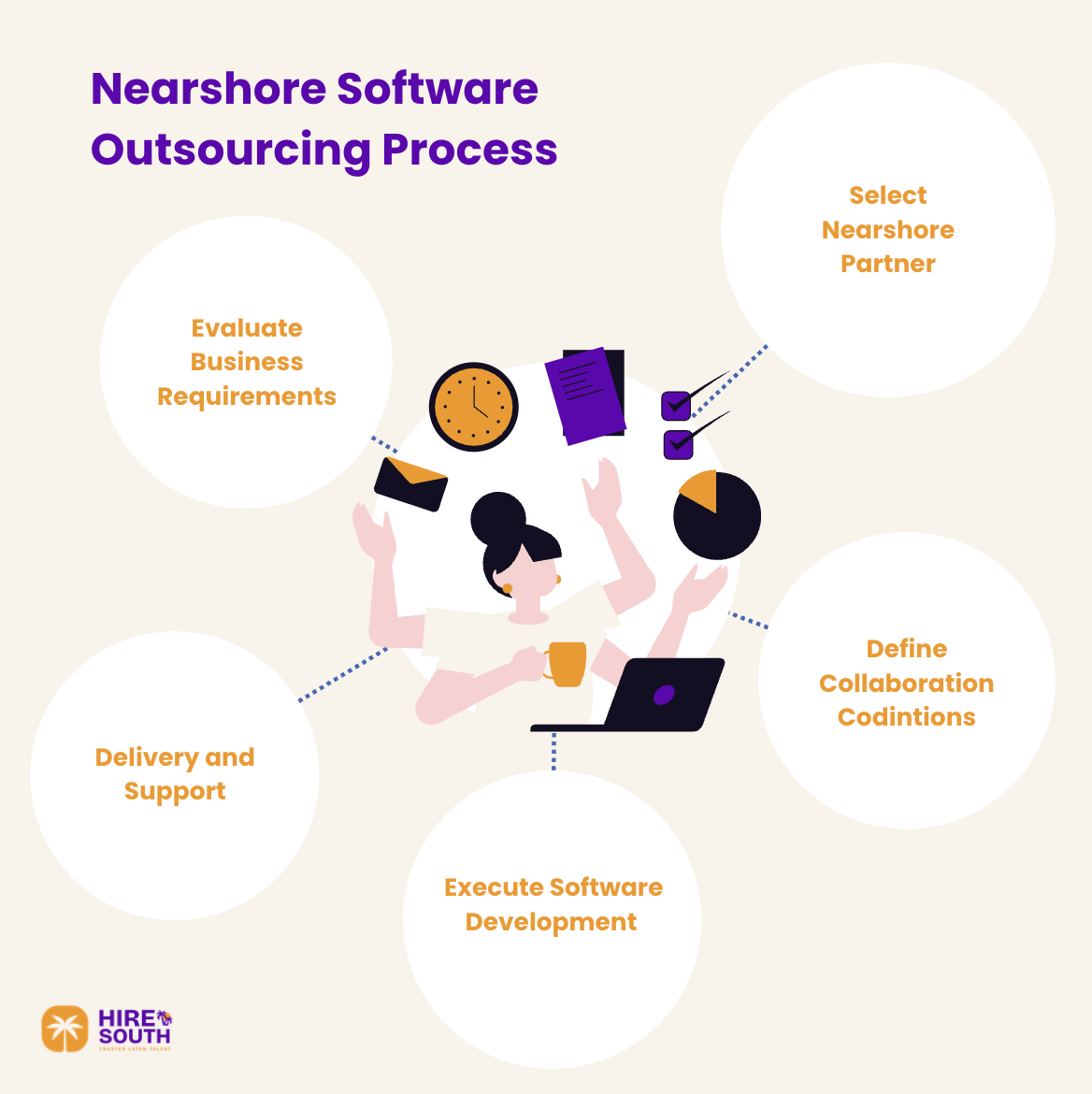
The Current State of Nearshoring:
The global push for operational efficiency has dramatically shifted how companies structure their engineering and business process teams. Rather than defaulting to the cheapest offshore locations, global enterprises are prioritizing time zone alignment and cultural affinity. This geographic proximity allows for real-time collaboration, faster agile cycles, and closer integration between in-house staff and external partners.
Why Nearshore Outsourcing in 2027 Matters:
Cost optimization remains a priority, but it is no longer the sole deciding factor for tech leaders. The focus has pivoted toward talent retention, operational control, and accessing specialized skills that are scarce in domestic markets. The nearshore delivery sector is projected to grow at a 10% compound annual growth rate through 2031, according to Mordor Intelligence.
Core Drivers Behind the Shift:
Organizations are moving away from traditional volume-based hiring. Key drivers include a severe shortage of senior technical roles, the need for stronger data security, and demand for seamless communication. Companies require scalable teams that can integrate securely with their domestic operations without the friction of a 12-hour time difference.
Top Nearshore Outsourcing Trends: Artificial Intelligence Integration
Trend 1: The Rise of AI Agent Identity Controls
As businesses deploy independent AI agents to handle tasks across multiple systems, managing permissions becomes a critical security challenge. Nearshore development teams now build dynamic identity frameworks to secure these machine-driven actions. Unmanaged machine privileges create massive vulnerabilities, and 25% of enterprise security breaches will trace back to AI agent abuse by 2028, according to Gartner.
Trend 2: Speech Reasoning Models for Support Services
Customer support centers in nearshore hubs are moving beyond standard scripted chatbots. The integration of speech reasoning models allows voice AI systems to process context directly from audio inputs, enabling them to resolve complex customer issues. This trend empowers human agents to step away from routine inquiries and focus entirely on high-value, judgment-intensive conversations.
Trend 3: Autonomous Exposure Remediation in Security
Cybersecurity threats are evolving faster than manual patching can handle. Nearshore security operations centers are adopting autonomous exposure remediation platforms to identify and fix vulnerabilities automatically. This proactive approach allows organizations to secure their digital estates efficiently without overworking their human security analysts.
Trends in Nearshore Outsourcing, Specialized Talent Demands
Trend 4: Transition to Smaller, Higher-Skilled Teams
The era of hiring massive offshore teams for routine tasks is ending. AI is absorbing repetitive work, leaving a strong need for critical thinking and advanced problem-solving skills. Consequently, outsourcing in 2027 rewards smaller, highly skilled teams that are co-managed closely with the client, according to Connext.
Trend 5: Soaring Demand for Cloud and Mission-Critical Architects
Global businesses are aggressively modernizing their legacy platforms, sparking a fierce competition for senior infrastructure talent. In Latin America alone, the technology talent pool boasts over 2.3 million professionals and produces nearly 296,000 STEM graduates annually, according to Sagant. However, senior profiles in cloud architecture remain exceptionally scarce, prompting companies to secure nearshore partnerships specifically for retention and expertise.
Trend 6: Growth of Large Quantitative Models Expertise
Probabilistic language models often fail when applied to strict numerical and financial forecasting. To address this, nearshore engineering hubs are specializing in large quantitative models designed explicitly for rigorous data analysis. These hybrid neural networks allow industries like finance and healthcare to automate forecasting safely and accurately.
2027 Nearshoring Trends, Advanced Security and Compliance
Trend 7: Adoption of Sovereign Tech to Prevent Lock-in
Relying on a single dominant cloud or software provider presents significant operational risks. Nearshore technical teams are increasingly building applications with sovereign tech principles, ensuring software and databases maintain realistic exit strategies from critical vendors. Over 75% of non-U.S. based organizations will adopt digital sovereignty strategies by 2030, according to Gartner.
Trend 8: Heightened Focus on Intellectual Property Protection
Data privacy regulations are tightening globally, making intellectual property protection a central pillar of any outsourcing agreement. Nearshoring provides an advantage over distant offshore destinations by offering stronger alignment with US and European legal frameworks. This alignment simplifies compliance audits and reduces the legal friction associated with cross-border data transfers.
Trend 9: Real-Time Incident Escalation Workflows
When systems go offline, waiting for an offshore team to wake up is no longer acceptable. Nearshore locations provide overlapping working hours, enabling real-time incident response and joint troubleshooting. This synchronicity allows domestic and external engineering teams to resolve critical escalations collaboratively within the same business day.
Nearshore Outsourcing in 2027: Evolving Engagement Models
Trend 10: Shift from Hands-Off to Co-Management Structures
Clients are stepping away from traditional black-box outsourcing where the vendor controls all processes and reporting. Co-management structures are taking over, allowing clients to have a direct say in candidate selection, workflows, and performance metrics. This collaborative model ensures that external professionals align perfectly with the client's internal culture and strategic goals.
Trend 11: Dedicated Teams Over Freelancer Management
While freelancers offer short-term flexibility, scaling enterprise projects requires the stability of a dedicated workforce. Product companies are leveraging nearshore software R&D centers to build fully owned engineering teams. This model provides the operational infrastructure to scale rapidly while securing long-term financial durability and better talent retention.
Trend 12: Agile and Continuous Delivery Acceleration
Overlapping time zones eliminate the painful next-day cycles for code reviews and architecture approvals. Nearshore teams participate in daily standups and agile ceremonies alongside their domestic counterparts. This tight integration accelerates continuous delivery pipelines, allowing businesses to push product updates to market faster and with fewer integration errors.
Regional Shifts in Latin America and Eastern Europe
Trend 13: Mexico and Brazil Maturing as Tech Hubs
Mexico and Brazil continue to dominate the nearshore landscape for North American companies. Brazil alone represents 54.1% of South America's IT services market, according to Sagant. These countries offer deep talent pools, competitive cost-to-quality ratios, and robust tech ecosystems capable of supporting large-scale enterprise modernization efforts.
Trend 14: Eastern Europe Sustaining R&D Growth
Despite geopolitical complexities, Eastern Europe remains a powerhouse for high-quality software engineering. Countries like Poland and Romania provide exceptional technical depth and strong English proficiency, making them ideal nearshore partners for Western European markets. These regions are particularly favored for establishing dedicated R&D centers and recruiting specialized full-stack engineers.
Trend 15: Infrastructure Investments Boosting Connectivity
To capture a larger share of the global outsourcing market, developing nations are heavily investing in critical infrastructure. Improvements in digital connectivity, energy reliability, and transportation logistics are making nearshore destinations more stable and business-friendly. These structural upgrades directly reduce operational risks for foreign companies setting up technology hubs.
Nearshore Outsourcing Future Trends and Beyond
Navigating Geopolitical and Supply Chain Shifts:
The global business environment is becoming increasingly fragmented, forcing companies to regionalize their supply chains and digital operations. Nearshoring acts as a strategic buffer against geopolitical instability, keeping critical operations closer to home. Businesses will continue to diversify their vendor portfolios across multiple aligned countries to mitigate unforeseen disruptions.
Enhancing Cross-Cultural Collaboration:
As technical skills become standardized globally, soft skills and cultural fit are emerging as major differentiators. Nearshore providers are investing heavily in communication training and cultural alignment programs. This focus ensures that distributed teams can navigate nuanced business challenges together, reducing friction and boosting overall productivity.
Strategic Next Steps for Business Leaders:
Leaders planning their tech strategies for the next decade must prioritize value over raw cost savings. Partnering with nearshore firms that offer specialized expertise, transparent management practices, and robust security frameworks is essential. Companies should evaluate potential partners based on their ability to retain senior talent and integrate seamlessly into existing digital workflows.
Ready to Get Started With Nearshore Outsourcing Trends in 2027?
As the Latin American outsourcing market races toward a projected $76.53 billion by 2027, waiting to build your nearshore strategy simply leaves your company behind the curve. Finding the right talent across borders does not have to be a complicated guessing game, though.
At Hire South, we connect you directly with rigorously vetted, highly skilled professionals in time zones that actually match your daily schedule. Whether you need senior software engineers, dynamic AI support specialists, or a fully dedicated agile team, we handle the regional recruiting and compliance heavy lifting. This allows you to focus entirely on scaling your operations. Book a free discovery call today to find the exact experts you need to drive your upcoming projects forward!