


Building a high-performance sales team used to mean months of recruiting, expensive office leases, and the heavy weight of fixed overhead. Today, the math is changing. Whether you are a founder looking to find product-market fit or a VP of Sales aiming to scale revenue, the question isn’t just about who you hire but about where and how they work.
Outsourced sales development has evolved from a simple cost-cutting measure into a sophisticated growth lever for modern businesses. According to a study by The Bridge Group, productivity remains the number one challenge for inside sales organizations, which explains why so many leaders are turning to external partners to stabilize their pipelines. Sales nearshore outsourcing, in particular, has become a go-to strategy for maintaining high activity levels without the constant headache of local hiring churn.
This article breaks down the strategic shift toward external sales roles and how it impacts your bottom line. You will discover the core benefits of outsourcing sales roles to specialized partners and why "nearshoring" is often the goldilocks zone for cultural and time-zone alignment. You will also find the specific frameworks needed to manage an external team without losing your brand’s voice, along with a guide to help you decide which parts of your funnel to keep close and which to hand off. If you have ever wondered if you can actually outsource sales without sacrificing quality, this is your roadmap.
What Sales Outsourcing Really Is
Think of sales outsourcing as a high-performance engine swap for your revenue department. Rather than building every component from scratch, you plug in a pre-tuned, specialized system to handle specific parts of your sales cycle. It is the strategic practice of hiring an external firm to manage functions like lead generation, cold outreach, or even closing deals.
At its core, this isn't just hiring a call center. Modern sales outsourcing is about buying access to a refined infrastructure. When you partner with a provider, you aren't just getting "seats"; you are getting their data stacks, their proprietary outreach playbooks, and their management layers. According to The Bridge Group, the average in-house SDR takes over three months to reach full productivity, but an outsourced team often launches in under four weeks because their ramp-up happens on the agency's time, not yours.
The Different Models of Outsourced Sales:
Not all partnerships look the same. You might choose a Top-of-Funnel model, where the external team focuses strictly on Sales Development Representative (SDR) tasks, identifying prospects and booking meetings for your internal closers. This is the most common approach for companies with complex products that require a "human touch" for the final handshake.
Alternatively, some organizations move toward Full-Cycle Outsourcing. In this scenario, the partner manages everything from the initial "hello" to the signed contract. This is particularly effective for small-to-medium businesses (SMBs) or companies launching a new product in a fresh territory where they don't yet have a local footprint.
Why Technical Integration Matters More Than Ever:
In today’s AI-driven landscape, sales outsourcing is deeply technical. The best partners don't work in a silo; they integrate directly into your CRM, whether that is Salesforce, HubSpot, or a niche platform. This transparency is vital for E-E-A-T (Experience, Expertise, Authoritativeness, and Trustworthiness). You need to see the "how" behind the results.
Modern providers use "Human-in-the-Loop" AI to personalize outreach at a scale that a single internal hire simply cannot match. According to Salesforce, 81% of high-performing sales teams are now investing in AI to assist with research and note-taking. When you outsource, you are essentially "renting" this advanced tech stack without having to manage the licenses or the learning curve yourself.
Why Outsource Sales in 2026?
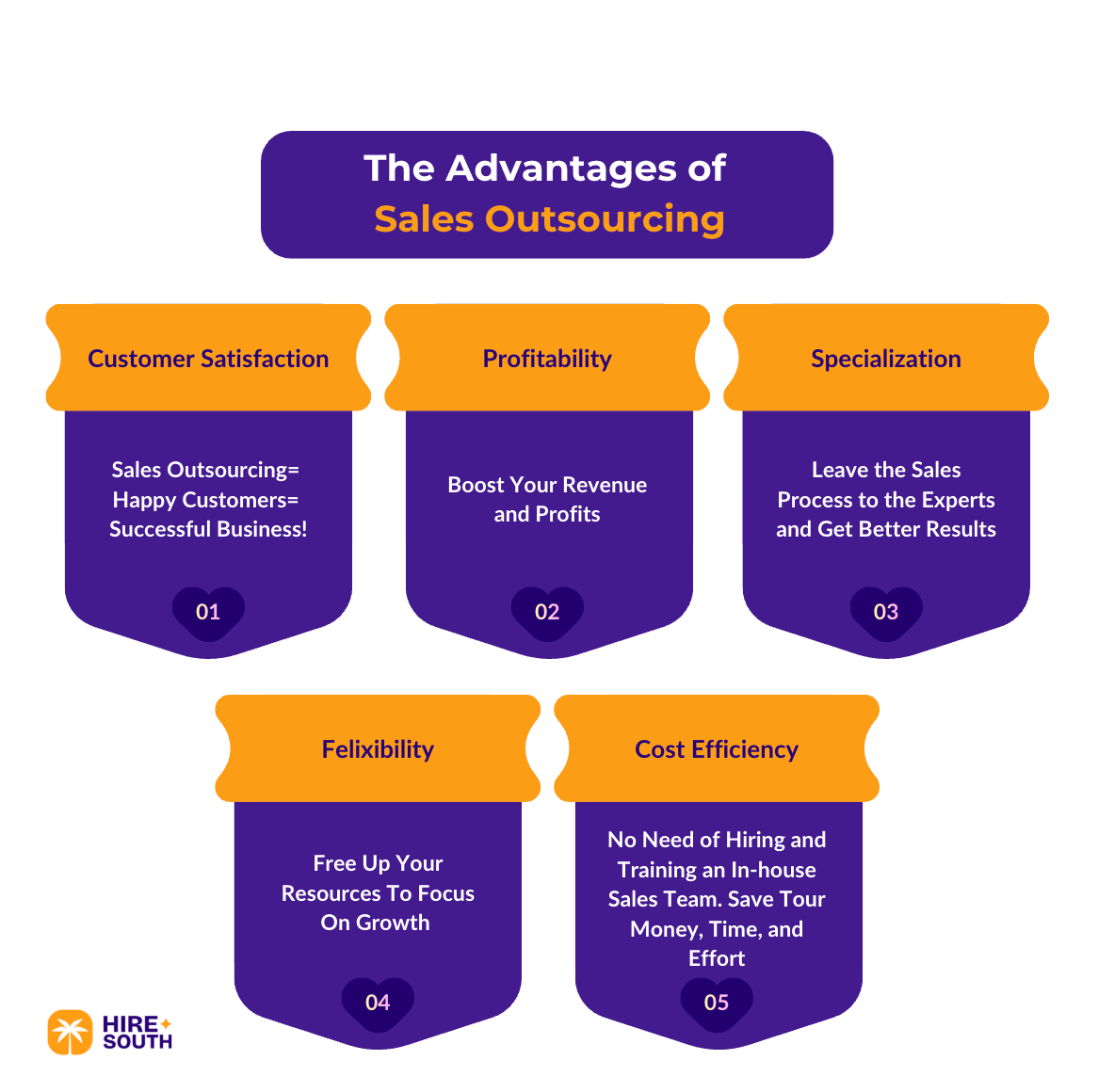
The sales landscape in 2026 is no longer about who can make the most calls; it is about who can navigate a hyper-automated, AI-intermediated buying process. As Gartner predicts that 90% of B2B buying will be AI-agent intermediated by 2028, businesses are realizing that the old "hire and hope" model for internal teams is too slow and rigid. Outsourcing has shifted from a cost-saving tactic to a high-level strategic requirement for staying competitive in a market that moves at the speed of an algorithm.
Bridging the Global Talent and Skills Gap.
Finding qualified sales talent has become a primary bottleneck for growth. According to data from Activated Scale, approximately 74% of employers in 2025 reported significant challenges in finding local talent with the specialized skills required for modern B2B sales. By 2026, this gap has only widened as the demand for "technical sellers", those who can manage AI workflows alongside human relationships, surpasses the available supply in major metropolitan hubs.
Outsourcing allows you to bypass the local "talent war" entirely. Instead of competing for a limited pool of expensive SDRs in your immediate zip code, you gain instant access to a global workforce that is already trained on the 2026 sales tech stack. This isn't just about filling seats; it is about injecting immediate expertise into your funnel without the six-month wait time usually associated with executive search firms and onboarding.
The Financial Shift from Fixed to Variable Costs.
The "fully loaded" cost of a single in-house SDR in the United States has climbed significantly. When you calculate base salary, FICA taxes, health insurance, 401(k) matching, and the essential tech stack (CRM, data enrichment, and AI tools), the annual cost often exceeds $150,000. The Bridge Group notes that the average tenure for these roles is still roughly 15 months, meaning you are likely to lose that $150,000 investment just as the employee hits their peak productivity.
By choosing to outsource sales, you convert these high, high-risk fixed costs into a predictable variable expense. Most outsourcing models in 2026 operate on a "Sales as a Service" (SaaS) basis, where you pay for outcomes or active capacity. This flexibility is vital for surviving market volatility; if you need to pivot your strategy or scale down during a quiet quarter, you can do so in weeks rather than dealing with the legal and cultural fallout of internal layoffs.
Accelerating Market Entry and Agility.
Speed is the ultimate currency these days. If you are launching a new product or entering a new geographic territory, building an internal team from scratch is a massive liability. Recent industry data shows that outsourced sales projects achieve, on average, 15% higher efficiency in their first few months compared to teams built from the ground up. This is because outsourced providers come with "ready-made" operational processes and verified data sets.
You don't have to spend months testing which subject lines work or which LinkedIn cadences resonate with a specific niche. Your outsourcing partner has likely already run similar campaigns for other clients in your vertical. They provide a "plug-and-play" infrastructure that allows you to start generating a pipeline in days, giving you a massive head start over competitors who are still stuck in the "recruiting and training" phase.
Leveraging Advanced AI and Data Stacks.
The cost of a modern sales tech stack, including AI-powered prospecting, intent data, and conversation intelligence, is now a significant line item. According to Salesforce, 81% of high-performing teams are already using AI to handle research and personalization. For a mid-market company, licensing these tools individually can cost thousands per month per user.
When you outsource sales development, you aren't just hiring people; you are "renting" a sophisticated technology ecosystem. Outsourcing firms spread the cost of these elite tools across multiple clients, allowing you to benefit from enterprise-grade AI and "Human-in-the-loop" automation at a fraction of the cost of buying the software yourself. This technical edge is what separates companies that merely "exist" in the market from those that dominate their category.
Key Sales Roles You Can Successfully Outsource
Modern sales outsourcing has moved far beyond simple "cold calling" services. In 2026, specialized firms offer granular expertise that allows you to unbundle your sales department and hire for specific outcomes. This "modular" approach to your sales team ensures that high-value internal closers are never bogged down by administrative tasks or cold prospecting.
1. Sales Development Representatives (SDRs) and Lead Generation
The most common role to move externally is the Sales Development Representative. Outsourced SDRs focus exclusively on the "top of the funnel," identifying prospects and qualifying them before they ever reach your internal team. This is a high-turnover, high-activity role that benefits significantly from the infrastructure of an agency.
According to The Bridge Group, the average in-house SDR tenure is roughly 15 months, leading to a constant cycle of recruiting and "ramp-up" costs. By outsourcing this role, you bypass the hiring friction. Agencies typically have proprietary "playbooks" and data stacks already in place, allowing an outsourced SDR to start booking meetings in as little as four weeks, compared to the four-month ramp-up period common for in-house hires.
2. Account Executives (AEs) for High-Volume Markets
While many companies keep "Enterprise" closers in-house, many are now outsourcing Account Executives for SMB (Small and Medium Business) and mid-market segments. These outsourced AEs handle the entire sales cycle, from the initial discovery call to the final contract signature.
This model is particularly effective for Product-Led Growth companies or those expanding into new geographic territories where they lack local expertise. Data from Market.biz indicates that the global sales outsourcing market is projected to reach $1.97 billion by 2031, with a growing percentage of that revenue coming from full-cycle sales management rather than just lead generation.
3. Sales Operations and CRM Managers
Sales Operations (SalesOps) is the "engine room" of your revenue team, yet it is often the most under-resourced. You can now outsource the technical management of your sales stack, including CRM configuration (Salesforce or HubSpot), lead routing logic, and data hygiene.
In 2026, the average sales team uses 13 different tools, according to Salesmotion. Managing this "tech debt" internally is expensive and distracts your leadership. Outsourced SalesOps providers ensure your data is clean and your attribution models are accurate, allowing your managers to focus on coaching rather than fixing broken automation rules.
4. Specialized Technical Sales and Team Pods
For complex SaaS or engineering products, you can outsource "Sales Pods" that include a mix of SDRs and technical sales assistants. These assistants handle the "pre-sales" heavy lifting, such as setting up demo environments or answering technical security questionnaires.
According to iSaless, 2026 has seen the rise of "Full-Funnel Sales Pods" that integrate directly into a client's Slack and CRM. This model provides continuity because the prospect interacts with a consistent team rather than being "tossed over the fence" from a low-level researcher to a senior closer. This integration prevents the "handoff fatigue" that often kills deals in a complex B2B cycle.
How To tell If You Should Outsource Sales Roles
Deciding whether to build internally or hire an external partner isn't just about your current budget. It is a strategic calculation based on your growth stage, your market complexity, and your internal bandwidth. If your executive team is spending more time debugging CRM workflows than coaching reps, or if your "top-of-funnel" has become a ghost town, you are likely at a tipping point.
1. Your Lead Flow is Inconsistent or Non-Existent
If your revenue depends on "founder-led sales" or sporadic referrals, you have a scalability problem. A primary indicator that you should outsource is the inability to maintain a steady volume of discovery calls. When your internal team is busy managing existing accounts, prospecting usually falls off the priority list.
According to HubSpot, 40% of sales reps say prospecting is the most challenging part of the sales process. If your internal staff is struggling to hit activity benchmarks, bringing in an outsourced SDR team provides the dedicated focus needed to keep the calendar full while your veterans focus on closing.
2. The Cost of In-House Turnover is Eroding Your Margins
Take a hard look at your churn rate for entry-level sales roles. If you find yourself in a constant "hire, train, quit" cycle, the hidden costs are likely higher than you realize. According to more data from The Bridge Group, the average SDR tenure has dipped to roughly 15 months, yet it takes about 4 months for a new hire to become fully proficient.
This means you are only getting 11 months of full productivity for every 15 months of salary paid. If your HR department is perpetually interviewing for the same three seats, outsourcing those roles transfers the burden of recruiting, training, and retention to a partner, allowing you to pay for outcomes rather than overhead.
3. You Are Testing a New Market or Product Line
Launching into a new vertical or geographic territory is a high-risk gamble. Building a dedicated internal team for an unproven market requires significant capital expenditure before you even see a single dollar in return.
Outsourcing serves as a low-risk "sandbox" for market validation. By leveraging a partner's existing infrastructure, you can test messaging and gather market feedback in weeks rather than months.
4. Your Tech Stack is Underutilized and Expensive
Modern sales require a mountain of software, intent data tools, automated dialers, LinkedIn automation, and conversation intelligence. If you are paying for these licenses but don't have a dedicated SalesOps person to manage them, you are wasting capital.
When you outsource, you aren't just hiring people; you are accessing a fully optimized "revenue engine." According to Salesforce, high-performing sales teams are 2.8 times more likely than underperformers to use AI and advanced automation. An outsourcing partner provides these elite tools as part of their service, saving you the five-figure annual licensing fees and the technical headache of integration.
5. You Lack the Infrastructure for Sales Coaching
Effective sales teams require constant management, call reviews, and script iterations. If your Sales Manager is also your VP of Marketing or a busy founder, your reps aren't getting the mentorship they need to succeed.
If you find that your "manager-to-rep" ratio is higher than 1:8, performance will inevitably slip. Outsourcing provides an inherent management layer. You hold the partner accountable for the KPIs, and they handle the granular coaching and daily motivation required to keep a sales force hitting their numbers.
Ready to Outsource Sales Roles?
In a market where the cost of a bad sales hire can reach up to $200,000, the traditional build-first approach is no longer the only path to revenue. Transitioning to an outsourced model allows you to trade the unpredictability of internal turnover for a scalable, data-driven engine that focuses exclusively on your bottom line.
At Hire South, we specialize in bridging the gap between ambitious growth goals and the reality of the talent market. Our nearshore outsourcing solutions provide you with high-caliber professionals who share your time zone and your drive for results. By integrating our firm with your existing workflow, we remove the friction of recruiting and training, allowing your leadership to focus on high-level strategy while we handle the heavy lifting of pipeline generation.
Whether you are looking to scale your lead generation or need a full-cycle sales team to penetrate a new vertical, our expertise ensures your brand voice remains consistent, and your CRM stays full. We don't just fill seats. Our services provide the technical and management layer necessary to outperform your competition in 2026. When you feel ready to find the next talent for you, don’t forget to book a free consultation!
.jpg)