


If you are still trying to scale your tech team by chasing the lowest possible hourly rate card halfway across the world, you are running a playbook that is officially out of date.
The global sourcing game has fundamentally changed. Today, it is all about temporal proximity, real-time collaboration, and finding elite engineering talent that actually works during your business hours. This shift is exactly why modern companies are abandoning distant offshore teams and looking south instead. In fact, 64% of North American companies now prioritize Latin America over Asia when time-zone alignment matters, according to the 2025 Global Outsourcing Survey by Deloitte.
This article breaks down the major 2026 nearshore trends and opportunities for LATAM talent that are reshaping the tech landscape. You will discover why US enterprises are moving away from asynchronous handoff delays, how top LATAM hubs like Brazil and Mexico are scaling their specialized tech workforces, and the exact strategies you need to build high-velocity, cross-border engineering teams without the usual friction.
The Key Nearshoring Trends To Keep in Mind
The nearshore landscape is no longer just about finding cheaper developers; it is about building high-velocity engineering teams that operate in lockstep with your onshore operations. As you navigate the engineering market this year, several structural shifts will dictate how you scale your cross-border teams.
1. The Rise of Fractional AI and Data Pods
Companies are moving away from hiring isolated, generalist software engineers. The focus has shifted toward embedding specialized, pre-assembled pods that can instantly take ownership of machine learning pipelines and predictive analytics infrastructure. Latin American tech hubs have adjusted quickly to this demand. In fact, 43% of LATAM tech professionals report using generative AI tools daily in their workflows, according to the 2025 State of Tech in LATAM Report by PageGroup. This means you get engineers who are already optimized for high-output, AI-augmented development from day one.
2. True Synchronous Collaboration Dominates Engineering Workflows
The hidden cost of asynchronous communication, waiting 12 hours for a pull request review from an offshore team, has forced engineering leaders to recalibrate. Companies are prioritizing real-time code collaboration during standard US business hours. This temporal alignment virtually eliminates the friction of delayed feedback loops. Tech organizations using nearshore teams experience a 35% reduction in project delivery cycle times compared to those relying on traditional offshore models with massive time-zone gaps.
3. The Premium on Mid-Level and Senior Regional Talent
While junior developer roles are increasingly automated or handled by internal tooling, the demand for senior architectural talent in Latin America has skyrocketed. US enterprises are looking southward for engineering leads who can manage complex cloud migrations, oversee microservices architecture, and lead local scrum teams. This has triggered a hyper-focus on English proficiency and client-facing communication skills across major regional tech hubs, transforming LATAM from a backend delivery center into a source of strategic engineering leadership.
How LATAM Professionals Can Win Top-Tier Roles
Securing elite, cross-border contracts with international enterprises requires looking beyond foundational programming skills. US engineering leaders look for strategic partners who seamlessly embed into internal product lifecycles.
Elevate Technical Communication with CEFR-Validated Fluency.
The ability to unblock a production emergency or argue the merits of an architecture design in real time is a major differentiator. While code speaks for itself, clear vocal alignment ensures you can act as an autonomous extension of a US team. In fact, 72.6% of vetted tech professionals in top regional networks maintain an upper-intermediate B2 English level or higher, with 44.8% operating at advanced C1 or C2 mastery, according to a 2026 workforce guide published by HiresLink.
To win premium roles, focus on articulating the underlying rationale behind your engineering choices during live technical interviews. Avoid technical jargon when explaining complex system trade-offs to non-technical stakeholders.
Shift from Resume Summaries to Data-Driven System Architecture Case Studies.
US tech startups and enterprise buyers review hundreds of text-heavy profiles weekly. Stand out by treating your professional history as a collection of high-impact system architecture case studies. Highlight the exact engineering problem, the specific technology stack utilized, and the quantifiable business outcome.
Specify your precise contribution to system throughput, latency reduction, or cloud architecture optimization. Frame your experience around how your code directly moved business metrics like system uptime, customer retention, or operational costs.
Demonstrate Proven Expertise in Specialized, High-Value Technical Stacks.
Generalist engineering profiles face heavy competition. To command premium hourly rates and long-term contracts, align your portfolio with critical domain specializations. The demand for deep expertise in distributed data systems, cloud-native engineering, and specialized mobile frameworks outpaces general frontend roles.
Establish Infrastructure Reliability and Transparent Remote Work Standards.
International companies look for partners who actively eliminate the operational risks of remote collaboration. Optimize your local setup to mirror standard onshore enterprise environments. This means maintaining high-speed fiber-optic connectivity with secondary backup lines, utilizing a hardware-backed VPN, and ensuring clear audio hardware for meetings.
Transparency in your deployment workflows, meticulous documentation practices, and proactive Git pull request updates provide engineering managers with immediate visibility. This structural predictability builds deep professional trust across borders.
3 Fantastic Opportunities for LATAM Talent In The Nearshore Market
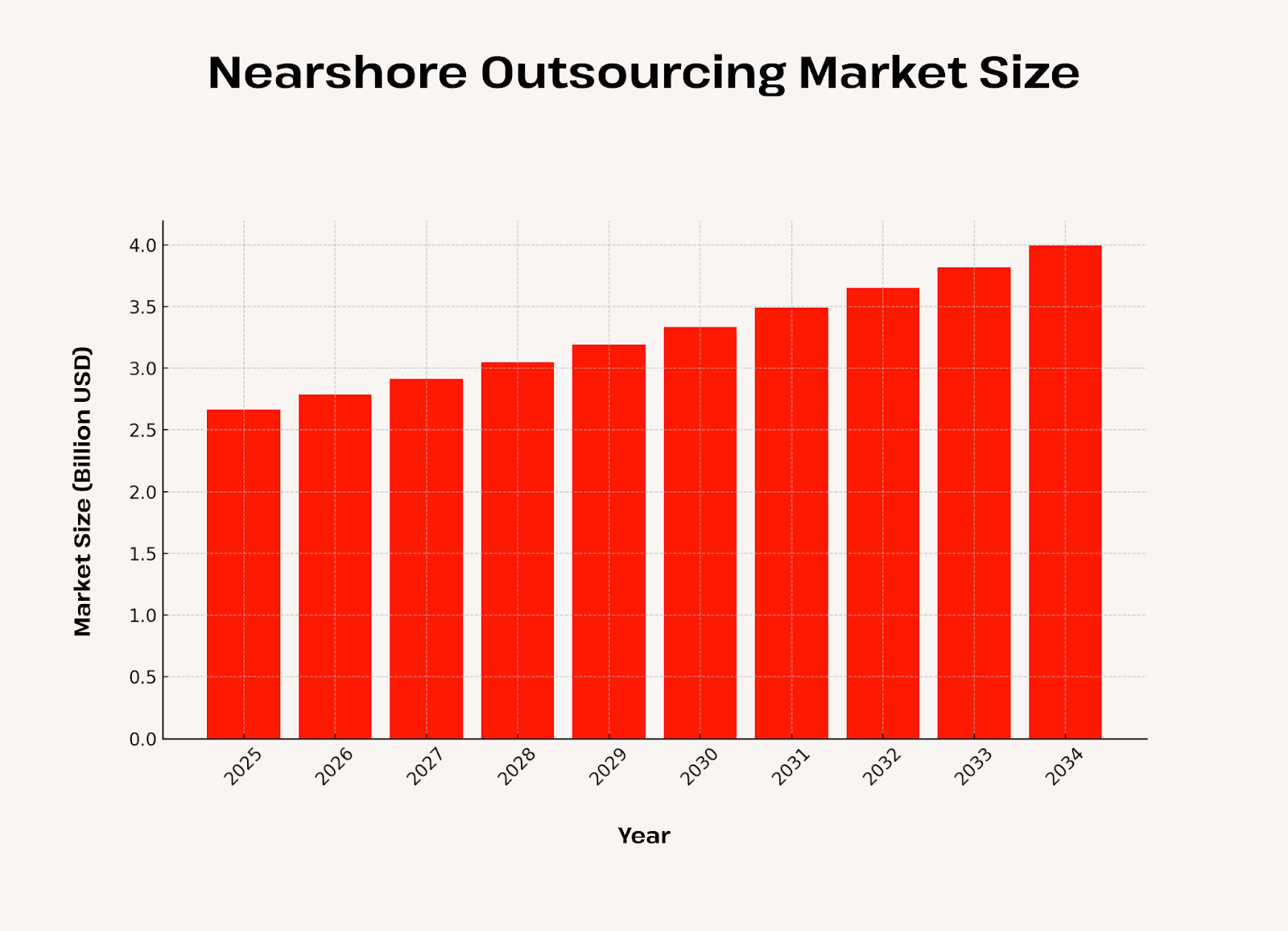
The intersection of severe North American tech talent shortages and expanding regional infrastructure has opened up high-yield avenues for Latin American specialists. If you are tracking where the strongest engineering demand is clustering this year, specific market segments offer distinct advantages.
1. Capitalize on the Cross-Border Fintech Boom and Regulatory Alignment
The financial technology sector remains one of the most lucrative grounds for regional engineering professionals. US-based neo-banks, payment processors, and lending platforms are actively sourcing engineering talent that understands compliance frameworks, data privacy laws, and transactional security protocols. Latin America itself has become a breeding ground for this sector. The region now features a mature ecosystem of over 3,000 fintech institutions, according to market data compiled by AgileEngine.
This vibrant internal ecosystem means you can source developers who already possess deep domain experience in building digital wallets, open banking APIs, and fraud detection engines. This minimizes domain training times for US companies looking to scale their engineering operations instantly.
2. Target Advanced Machine Learning Operations and Cloud Native Pipeline Roles
The corporate push to integrate AI models into everyday software products has shifted the hiring focus from theoretical researchers to practical implementation experts. Companies look for professionals who can build, scale, and maintain the underlying infrastructure that feeds these systems.
The regional appetite for these technologies is massive. Mexico and Brazil alone account for roughly 95% of all AI patents filed across Latin America, according to digital infrastructure trends tracked by AgileEngine. Professionals who can orchestrate complex data environments using platforms like Snowflake, dbt, and Apache Spark are seeing a significant surge in direct inbound recruiting outreach from US enterprise buyers.
3. Maximize the Demand for Scalable E-Commerce Ecosystems and Core Product Engineering
E-commerce is no longer just about setting up a standard digital storefront; it requires complex microservices architecture, localized logistics integrations, and lightning-fast user interfaces. US retail brands are aggressively modernizing their legacy codebases to compete with agile, direct-to-consumer digital natives.
Because Latin American developers frequently operate in fast-moving, highly competitive regional commerce markets, they bring deep experience in high-traffic engineering. This includes building headless commerce APIs, managing complex inventory databases, and streamlining payment gateways. This practical, real-world experience maps directly to what North American product managers need when scaling core software assets under tight product release deadlines.
Ready to Hire LATAM Talent?
The shifting dynamics of the 2026 global tech landscape make one truth clear: geographical alignment is no longer a luxury for engineering teams; it is an operational necessity. As organizations abandon traditional, heavily fragmented offshore structures to protect their production timelines, the demand for highly skilled professionals in nearby time zones continues to hit record highs.
At Hire South, we specialize in bridging this gap by connecting growing North American companies with the top 1% of vetted, bilingual talent across Latin America. Our dedicated cross-border recruitment infrastructure accelerates your growth by building elite remote engineering and operations teams in 21 days or less. By partnering with us, you eliminate the overhead of traditional global sourcing while capturing up to 70% in operational cost savings relative to local US hiring. Let us manage the intensive screening, global compliance, and international payroll workflows so you can focus entirely on scaling your core product roadmap with synchronous, real-time collaboration. Contact us to get started today!