


Hiring remote talent in Chile has moved from a niche option to a practical growth strategy for global companies. Strong technical education, solid infrastructure, and time zone alignment with North America make Chile’s remote talent pool especially attractive if you are scaling teams without inflating costs.
This article breaks down what you need to know before hiring. You will learn why companies hire remote talent in Chile, which roles are most in demand, how much it really costs, and what legal and compliance factors matter most. It also covers the best hiring models, from direct hiring to Employer of Record solutions, and walks through a step-by-step process to hire with confidence.
Chile stands out in fundamentals. The country has one of the highest internet penetration rates in Latin America at over 90 percent, according to the World Bank, which directly supports reliable remote work. Chile also ranks first in Latin America for English proficiency according to EF’s English Proficiency Index, making collaboration with international teams far easier.
If you are evaluating Chile’s remote talent market, this guide gives you a clear, practical framework to move forward. Keep reading to learn more!
Why You Should Hire Remote Talent in Chile
1. Strong Technical Education and a Growing Tech Workforce
Chile’s workforce has a solid foundation in engineering, software, and data-related fields. Universities like Universidad de Chile and Pontificia Universidad Católica consistently rank among the top in Latin America for STEM education, and their graduates are increasingly entering the remote job market. If you need developers, data analysts, or IT specialists who can work with modern tools and methodologies, Chile is one of the more reliable talent pools in the region.
2. High English Proficiency Compared to The Region
Language can make or break remote collaboration. Chile ranks first in Latin America for English proficiency according to the EF English Proficiency Index, making communication smoother for international teams. That’s not just about basic English, it’s about being able to understand technical documentation, participate in meetings, and collaborate without constant translation friction.
3. Time Zone Alignment That Fits North American Teams
Chile operates mostly in GMT-3 to GMT-4, which means your team can overlap with U.S. and Canadian work hours for a large portion of the day. That overlap is not just convenient; it reduces lag in decision-making and keeps project momentum moving. If you’re used to working across time zones, you’ll notice the difference quickly.
4. Reliable Infrastructure and Stable Connectivity
Remote work depends on dependable internet and electricity. Chile has one of the highest internet penetration rates in Latin America, at over 90 percent according to the World Bank, which directly supports remote collaboration. That level of connectivity reduces the risk of frequent downtime and keeps your team productive.
5. A Mature, Professional Remote Work Culture
Chile has been part of the remote work shift for years, not just since the pandemic. Many professionals are already accustomed to distributed work, asynchronous communication, and online project management tools. This reduces onboarding friction and improves long-term retention, because your remote hires already know how to work remotely effectively.
6. Competitive Cost Structure Without Sacrificing Quality
Hiring remote talent in Chile can be more cost-effective than hiring locally in the U.S. or Europe, while still maintaining high standards of work. You’re not choosing between cost and quality. In many cases, you get both. The key is knowing where to look and how to structure roles and expectations.
7. Strong Legal and Business Stability for International Employers
Chile has one of the more stable economies in Latin America, and its business environment is generally predictable. That stability matters when you’re hiring remotely because it reduces compliance risk and makes payroll, contracts, and employment rules easier to navigate. You can build long-term teams with fewer surprises.
8. A Talent Pool That Fits Modern Product and Engineering Needs
Chile’s remote talent is often strong in software development, cloud engineering, and data work. If you need people who can contribute to scalable products, not just handle basic tasks, Chile has a solid base of professionals who meet those standards. The work quality tends to align with international expectations, not just regional ones.
Chile’s Talent Landscape
A Workforce Shaped by Strong STEM Education.
Chile’s talent pool is anchored by universities that produce a steady stream of engineering and technology graduates. This matters because you’re not just hiring skills, you’re hiring a foundation built on rigorous academic training. Many graduates enter the job market with a strong understanding of programming fundamentals, data structures, and software engineering best practices.
Concentration of Talent in Major Urban Centers.
The majority of Chile’s tech professionals are located in Santiago, with other hubs in cities like Valparaíso and Concepción. This concentration matters for you because it affects availability, speed of hiring, and local networking. If you’re looking for specialized roles, you’ll likely find the best match in Santiago’s talent pool.
Strong Emphasis on Software Development and IT Services.
Chile’s remote talent market is heavily skewed toward software development, IT, and digital services. You’ll find a large number of professionals in full-stack development, mobile apps, DevOps, and cloud engineering. The ecosystem supports modern stacks, including JavaScript frameworks, Python, Java, and cloud platforms like AWS and Azure.
Growing Interest in Data and AI Roles.
While software engineering remains dominant, data and AI skills are becoming more common. More professionals are gaining experience in machine learning, data analysis, and business intelligence tools. If you’re building data-driven products, Chile’s talent landscape is adapting quickly to those needs.
Increasing Presence of Remote-first and Hybrid Work.
Remote work is not a new trend in Chile, but it has become more institutionalized. Many companies now operate in hybrid models, which means professionals are comfortable with remote collaboration tools, asynchronous workflows, and digital communication. You can expect candidates who already understand how to work in a distributed environment.
English Proficiency Supports International Collaboration.
Chile ranks first in Latin America for English proficiency according to the EF English Proficiency Index. This is not just a nice-to-have, it’s a real advantage when you’re coordinating across borders. It reduces miscommunication, speeds up onboarding, and makes cross-functional work smoother.
Talent Supply is Expanding, but Demand is Rising Too.
Chile’s talent pool is growing, but so is demand. As more companies adopt remote hiring, you may face competition for the most qualified candidates. This means you’ll need to move quickly, structure attractive roles, and be clear about expectations to secure top talent.
A Practical, Results-Oriented Work Culture.
Chile’s professional culture tends to emphasize reliability and measurable outcomes. If you value execution, consistency, and professionalism, you’ll find many candidates who align with those expectations. Remote work in Chile often translates into a disciplined approach to deliverables and timelines.
A Modern Tech Ecosystem With Local and International Support.
Chile’s tech ecosystem includes local startups, established software companies, and international firms operating in the country. That mix matters because it creates a talent pipeline that understands both local business realities and global standards. You’re more likely to find professionals who can work on international projects without needing extensive adjustment time.
Main Options To Hire Remote Talent in Chile
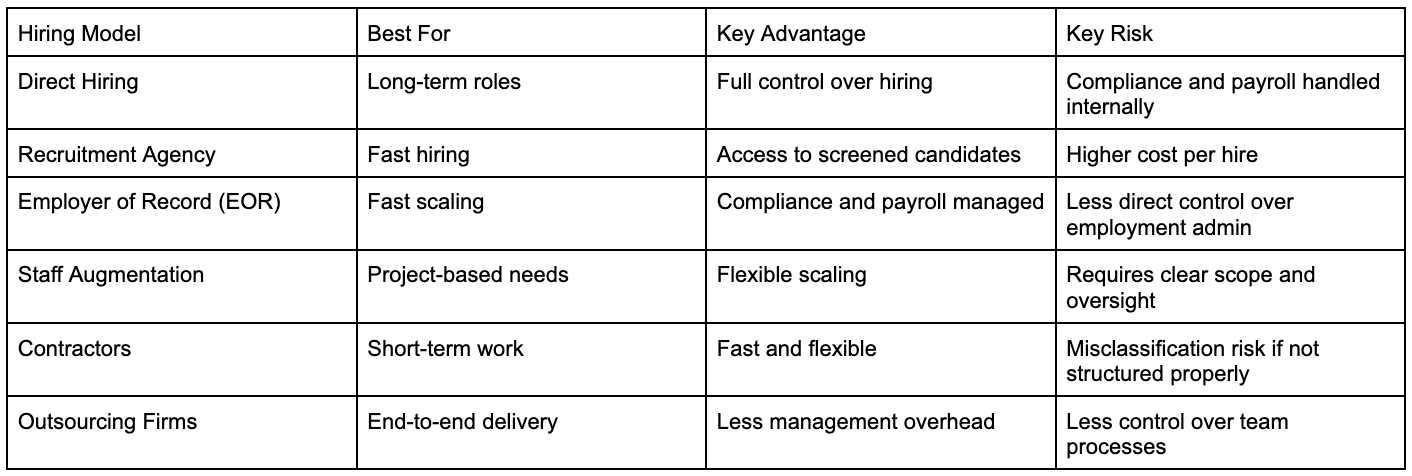
1. Direct hiring through local job boards and platforms
If you want full control over the hiring process, direct hiring is the most straightforward route. You post a role, screen candidates, and manage interviews yourself. The upside is that you can shape the candidate experience and select talent based on your exact criteria. The downside is that you must handle contracts, payroll, taxes, and compliance on your own.
Chile’s most common job boards and platforms include local sites like Laborum and Trabajando, plus global platforms such as LinkedIn and Indeed. If your role is technical, you’ll also find strong results on specialized sites like Stack Overflow Jobs or GitHub Jobs.
2. Hiring through recruitment agencies
Recruitment agencies can speed up the hiring process because they already have networks and pre-screened candidates. If you need a specific skill set quickly, agencies can be a good option. The trade-off is cost, since agencies usually charge a fee based on the candidate’s salary.
The value here is not just speed. Agencies often understand local expectations, salary ranges, and cultural fit. That can help you avoid common hiring mistakes, especially if you’re new to the Chilean market.
3. Using an Employer of Record (EOR)
An Employer of Record is a third party that legally employs the worker on your behalf. This model lets you hire talent without setting up a local entity. The EOR handles payroll, taxes, benefits, and compliance, while you retain operational control of the employee’s work.
This option is particularly useful if you want to scale quickly, avoid legal risk, and maintain a clean, compliant setup. You still need to manage performance and day-to-day tasks, but the administrative burden is significantly lower.
4. Staff augmentation or team extension
Staff augmentation is a flexible way to add skilled professionals to your team without full-time commitments. You typically work with a provider who supplies talent for specific projects or timeframes. This model works well if you have fluctuating workloads or need specialized skills temporarily.
In Chile, staff augmentation is commonly used for software development, data engineering, and IT support. It can be a faster way to fill gaps while you build a longer-term hiring strategy.
5. Hiring contractors
Contracting is a common approach for short-term or project-based work. Contractors in Chile can offer high flexibility and can be hired through a simple agreement. However, you must be careful with contractor classification rules, because misclassification can create legal and tax risks.
If you hire contractors, make sure the agreement is clear about scope, deliverables, deadlines, and payment terms. Also, ensure the contractor has the correct legal setup, such as a registered business or proper invoicing capabilities.
6. Working with Chile-based outsourcing firms
Outsourcing firms can take full responsibility for delivering an outcome, rather than supplying individuals. This option works well when you need a complete project handled by a team. You’ll typically pay for the project scope rather than managing individual hires.
The main advantage is that you reduce management overhead. The risk is less control over the team’s internal processes and potentially higher costs if the scope isn’t tightly defined.
7. Hiring through remote-first talent platforms
Remote-first platforms can help you access Chilean talent without dealing with local job boards. These platforms often provide built-in compliance, payments, and support. They also tend to have a broader pool of professionals already accustomed to remote work.
The downside is that fees can be higher, and you may face competition from other companies looking at the same candidates. Still, it’s one of the fastest ways to start hiring in Chile if you need speed and simplicity.
How To Hire Remote Talent in Chile: Step-by-Step
1. Define the role, outcomes, and must-have skills
Start by defining the role in terms of outcomes, not just tasks. What do you expect the hire to deliver in the first 30, 60, and 90 days? Write a job description that includes required technical skills, communication expectations, and performance metrics.
This step matters because it sets the foundation for the rest of the process. If the role is vague, you’ll get candidates who are a poor fit, and you’ll waste time on interviews that don’t lead anywhere.
2. Choose the right hiring model
Decide whether you will hire directly, work with an agency, use an Employer of Record, or engage a contractor. Your choice should depend on speed, risk tolerance, and long-term goals.
For example, if you need to hire quickly and avoid legal complexity, an Employer of Record can be a strong option. If you want full control and a long-term employee, direct hiring may be better.
3. Set a realistic budget and salary range
Chile’s salaries vary by role, experience, and location. If you want top talent, you need to align your budget with market rates. Research salary benchmarks for your specific role and level.
A clear salary range helps you avoid overpaying, and it also improves candidate trust. Candidates will be more likely to apply when they see a transparent range.
4. Source candidates through multiple channels
Use a mix of channels to reach the best candidates. That includes local job boards like Laborum and Trabajando, LinkedIn, specialized tech platforms, and referrals. If you are hiring for a niche role, consider using local communities, meetups, and developer groups.
The more channels you use, the higher your chance of finding someone who fits both technically and culturally.
5. Screen candidates with a structured evaluation
Use a structured screening process that includes skills, experience, and cultural fit. For technical roles, use coding tests, take-home assignments, or live technical interviews. For non-technical roles, use case-based questions that reflect real job scenarios.
A structured evaluation reduces bias and improves your chances of hiring someone who can actually perform in the role.
6. Conduct interviews that test real-world skills
Ask questions that reveal how the candidate works, not just what they know. For example, ask about past projects, how they solved challenges, and how they handled deadlines. Look for clarity in communication, ownership, and problem-solving ability.
This approach helps you avoid candidates who look strong on paper but struggle in real work environments.
7. Verify work history and references
Reference checks are a critical step in hiring remote talent. Ask previous employers or colleagues about reliability, communication, and ability to deliver results. This step is especially important for remote roles because trust and accountability are essential.
If a candidate cannot provide references, it may be a red flag, especially for senior roles.
8. Make a clear offer with terms and expectations
Once you choose a candidate, send a clear offer that outlines salary, working hours, deliverables, and any benefits. If you’re using an Employer of Record or contractor model, ensure the contract clarifies who is responsible for compliance, taxes, and benefits.
Clear terms reduce misunderstandings and build trust from day one.
9. Onboard with remote-first processes
Your onboarding should be structured and time-bound. Provide access to tools, documentation, and project context. Schedule introductions and align on priorities for the first two weeks.
A strong onboarding process improves retention and helps the new hire become productive faster.
10. Set performance metrics and feedback loops
Once the hire starts, establish measurable performance metrics and regular feedback sessions. Remote work can feel disconnected without consistent check-ins. Weekly or biweekly reviews help you stay aligned and identify issues early.
Performance metrics should be tied to outcomes, not just activity. This keeps the focus on results and reduces micromanagement.
11. Build a remote collaboration routine
Establish a communication rhythm that works for both sides. That may include daily standups, weekly planning, and monthly reviews. Choose tools that fit your team, like Slack for messaging and Asana for task tracking.
A predictable routine keeps the workflow smooth and prevents miscommunication.
12. Continuously optimize the hiring process
After each hire, review what worked and what didn’t. Track metrics like time-to-hire, quality of hire, and retention. Adjust your sourcing channels, interview process, and onboarding based on real outcomes.
This step helps you improve over time and build a stronger remote team in Chile.
The Best Practices When Hiring Remote Talent In Chile
Define expectations around working hours and overlap:
Chile’s time zone aligns closely with many North American markets, but expectations still need to be explicit. Clarify whether you expect full overlap, partial overlap, or flexible hours. This matters because remote work often fails not due to skills but due to misaligned schedules and response times.
Set a clear policy for response windows, meeting availability, and delivery deadlines. If you’re hiring across multiple time zones, document the overlap hours in the job description to avoid confusion.
Prioritize communication skills, not just technical ability:
In remote work, communication is a performance skill. You want candidates who can write clearly, explain their reasoning, and provide status updates without being prompted. That’s especially true for senior roles where decision-making is part of the job.
During interviews, ask candidates to describe how they communicate progress, handle roadblocks, and manage stakeholder expectations. Strong technical skills alone won’t compensate for poor communication in a distributed environment.
Use structured interviews and objective scoring:
A structured interview reduces bias and improves accuracy. Create a consistent set of questions for all candidates, and score responses based on predefined criteria. This helps you compare candidates fairly and focus on real performance potential.
Include role-specific scenarios and practical exercises. For example, for developers, include a coding task that reflects real work. For business roles, include case-based questions that mirror typical decisions they will face.
Verify legal status and compliance upfront:
Remote hiring in Chile involves legal considerations that can become costly if ignored. Ensure the candidate has the correct work authorization and invoicing setup if they will be a contractor. If you’re hiring as an employee, confirm how payroll and benefits will be handled.
If you are unsure, consult a local legal expert or use an Employer of Record. This step protects you from misclassification risks, which can lead to fines or back taxes.
Offer a competitive package with clarity on benefits:
If you want to attract top talent, salary is only part of the equation. Clarify benefits, bonuses, and professional development opportunities. Be transparent about what the role includes and what it doesn’t.
In Chile, candidates often consider stability and growth opportunities as strongly as compensation. If your offer is unclear or appears incomplete, candidates may drop out or negotiate aggressively.
Make onboarding structured and outcome-focused:
Remote onboarding should be a planned process, not a one-day orientation. Provide a timeline for the first 30 days, including key training, systems access, and early deliverables. Assign a mentor or buddy for the first few weeks.
A structured onboarding helps new hires become productive faster and reduces early turnover. It also signals that your company is organized and values remote work.
Build a feedback loop and measure performance regularly:
Remote teams need frequent feedback to stay aligned. Set weekly check-ins and monthly performance reviews that focus on outcomes. Use measurable KPIs tied to the role’s goals, not just activity.
When you track performance, you can identify issues early and correct course before they become bigger problems. It also helps with retention, because employees feel seen and supported.
Create a remote-friendly culture with clear tools and processes:
Your tools shape your remote work experience. Choose a small set of core tools for communication, project management, and documentation. Avoid tool overload, because too many platforms create confusion and reduce productivity.
Define processes for decision-making, documentation, and escalation. When the rules are clear, remote teams can operate independently without constant oversight.
Conduct reference checks that focus on remote work behavior:
Reference checks are especially important for remote roles. Ask about reliability, communication style, ability to meet deadlines, and how the candidate handled remote collaboration. These questions reveal patterns that may not appear in interviews.
If references highlight consistent issues with remote work, take that seriously. Skills can be trained, but work habits and communication style are harder to change.
Plan for retention from day one:
Retention starts with how you hire, onboard, and manage talent. Create growth paths and development opportunities, especially for high-performing employees. Remote talent in Chile often looks for roles where they can advance and learn new skills.
Regularly assess workload, satisfaction, and career goals. If you ignore retention, you may face frequent turnover, which increases cost and disrupts your project timelines.
Ready to Hire Remote Talent in Chile?
Chile’s remote talent market offers a clear advantage for companies that need high-quality technical skills, strong English proficiency, and time zone overlap with North America. With Chile ranking first in Latin America for English proficiency according to the info from EF English Proficiency Index, you can build teams that communicate clearly and deliver consistently.
At Hire South, we help you hire remote talent in Chile and Latin America without the common pitfalls of compliance, payroll, and hiring delays. Our approach is built on proven hiring frameworks, local market expertise, and a track record of placing skilled professionals across tech and business roles. If you want to move faster and hire with confidence, we can support every step of the process. Contact us to hire LATAM talent today!