


Colombia has one of the most holiday-rich calendars in the world, with 18 national public holidays each year, according to the local Ministry of Labor. That volume of long weekends and regional festivities shapes everything from travel patterns to staffing plans, which is why understanding the full holiday schedule is a must if you manage nearshore operations, work with Colombian teams, or frequently plan business activities in the country.
In this guide, you’ll get a clear breakdown of all holidays in Colombia, including national observances, religious celebrations, cultural milestones, and the regional festivals that make the country’s calendar unique. You’ll also find a simplified look at long weekends under the Emiliani Law, plus practical planning tips that help you navigate staffing, scheduling, and travel demands.
If you want a quick, usable reference for the complete list of Colombian holidays, along with context that helps you make better business decisions, this article sets you up with everything you need.
First Things First: How Colombia’s Holiday Calendar Is Updated Each Year
Governed by National Law.
Colombia’s holiday calendar is updated through a combination of Law 51 of 1983 (Ley Emiliani) and the annual resolutions issued by the Ministry of Labor. This law determines which holidays automatically shift to the following Monday, ensuring consistency across the country. According to the Ministry, 12 of Colombia’s 18 national public holidays fall under this rule each year, which is why long weekends are so common.
Annual Review by the Ministry of Labor.
Each year, the Ministry of Labor publishes an official calendar that confirms exact dates for both fixed and movable holidays. Movable dates, especially those tied to the Catholic liturgical calendar, rely on astronomical calculations for Easter. Because Easter can shift between March 22 and April 25, the dates of holidays such as Ascension Day or Corpus Christi shift as well. The Ministry releases the final schedule toward the end of the preceding year, so you have a standardized reference for HR planning, staffing, and operational forecasting.
Alignment With the Liturgical Calendar.
Religious holidays make up a large portion of Colombia’s public observances, so the country aligns several dates with the Vatican’s official liturgical calculations. Easter dates are set globally by the Gregorian calendar system, which was introduced in 1582 and remains the international reference point. Once Easter is established, related Colombian holidays are updated accordingly and then adjusted under the Emiliani Law if they fall midweek.
Integration Into Regional and National Planning.
Once the national list is finalized, other institutions update their own schedules. Schools, public sector agencies, and transport authorities align annual plans with the official holiday list. This structure helps reduce scheduling gaps, especially during high-mobility periods. For example, Colombia’s National Transit Registry reports that holiday weekends consistently produce traffic increases of 20 to 30 percent, which further supports the need for early calendar standardization.
Why Does This Matter for Your Nearshore Operations?
Accurate holiday updates prevent costly errors in workforce scheduling, payroll, and project timelines. Because the dates shift each year slightly, relying on outdated holiday charts can create compliance issues. The annual update cycle ensures you’re working with verified information that aligns with national labor regulations, school calendars, and the broader economic rhythm of the country.
All National Public Holidays in Colombia
The Core List of Mandatory National Holidays.
Colombia officially recognizes 18 national public holidays, a figure confirmed annually by the Ministry of Labor, placing the country among the nations with the highest number of public holidays worldwide. These dates apply uniformly across all departments and municipalities, giving you a predictable framework for operational and staffing decisions. The list includes civic observances, religious events, and historical milestones that are legally protected under national labor regulations.
Fixed-Date National Holidays You Can Count On.
Several holidays occur on the same date every year. New Year’s Day (January 1), Labor Day (May 1), Independence Day (July 20), and the Battle of Boyacá (August 7) never shift. These fixed dates make it easier to plan work periods, project milestones, and staffing arrangements far in advance. Because they remain constant, they also anchor the broader calendar for HR teams and organizations managing multi-country schedules.
Movable Holidays Adjusted Under the Emiliani Law,
Twelve national holidays fall under Law 51 of 1983, which moves midweek observances to the following Monday. This practice stabilizes long weekends and minimizes midweek disruptions. Holidays such as Ascension Day, Corpus Christi, and the Sacred Heart always shift depending on the Easter cycle, then move to the nearest Monday under the law. The Ministry of Labor updates the exact dates each year, allowing you to avoid planning blind spots caused by Easter-dependent variability.
The Religious Holidays Observed Across Colombia
1. Easter-Based Holidays That Shift Each Year
A significant share of Colombia’s religious holidays are tied to the Easter cycle, which is calculated using the Gregorian calendar and confirmed internationally by the Catholic Church. Because Easter can fall anywhere between March 22 and April 25, the dates for Ascension Day, Corpus Christi, and the Sacred Heart shift annually before being moved to the following Monday under the Emiliani Law. This creates predictable long weekends but requires you to check the updated calendar each year to avoid scheduling gaps.
2. Holy Week as a Nationwide Observance
Holy Week stands out as one of the most influential religious observances in the country. While only Maundy Thursday and Good Friday are official national holidays, the entire week triggers reduced business activity across many sectors. According to Colombia’s Ministry of Commerce, Holy Week consistently generates some of the highest domestic travel volumes of the year, which means you’ll often see delays in response times, adjusted staffing schedules, and increased service demands in tourism-facing industries.
3. Catholic Feast Days With Public Holiday Status
Colombia recognizes several Catholic feast days as national public holidays, including the Epiphany, Saint Joseph’s Day, Saints Peter and Paul, and the Assumption of Mary. These dates carry legal non-working status regardless of a company’s size or industry. Because most of these observances shift to a Monday, they contribute heavily to the country’s long-weekend rhythm and influence workforce availability, retail activity, and transportation flows.
4. Cultural Significance That Impacts Daily Operations
Although the religious nature of these holidays is rooted in Catholic tradition, their impact extends well beyond church participation. Many cities and towns organize processions, concerts, or cultural celebrations that affect mobility and business hours. The National Transit Registry reports that religious-holiday weekends generate some of the most concentrated traffic peaks of the year, particularly in regions with a strong Catholic heritage. Understanding how these observances shape consumer patterns and employee availability helps you plan around service slowdowns and demand surges.
The Impact of Colombia’s National Holidays on Nearshore Operations
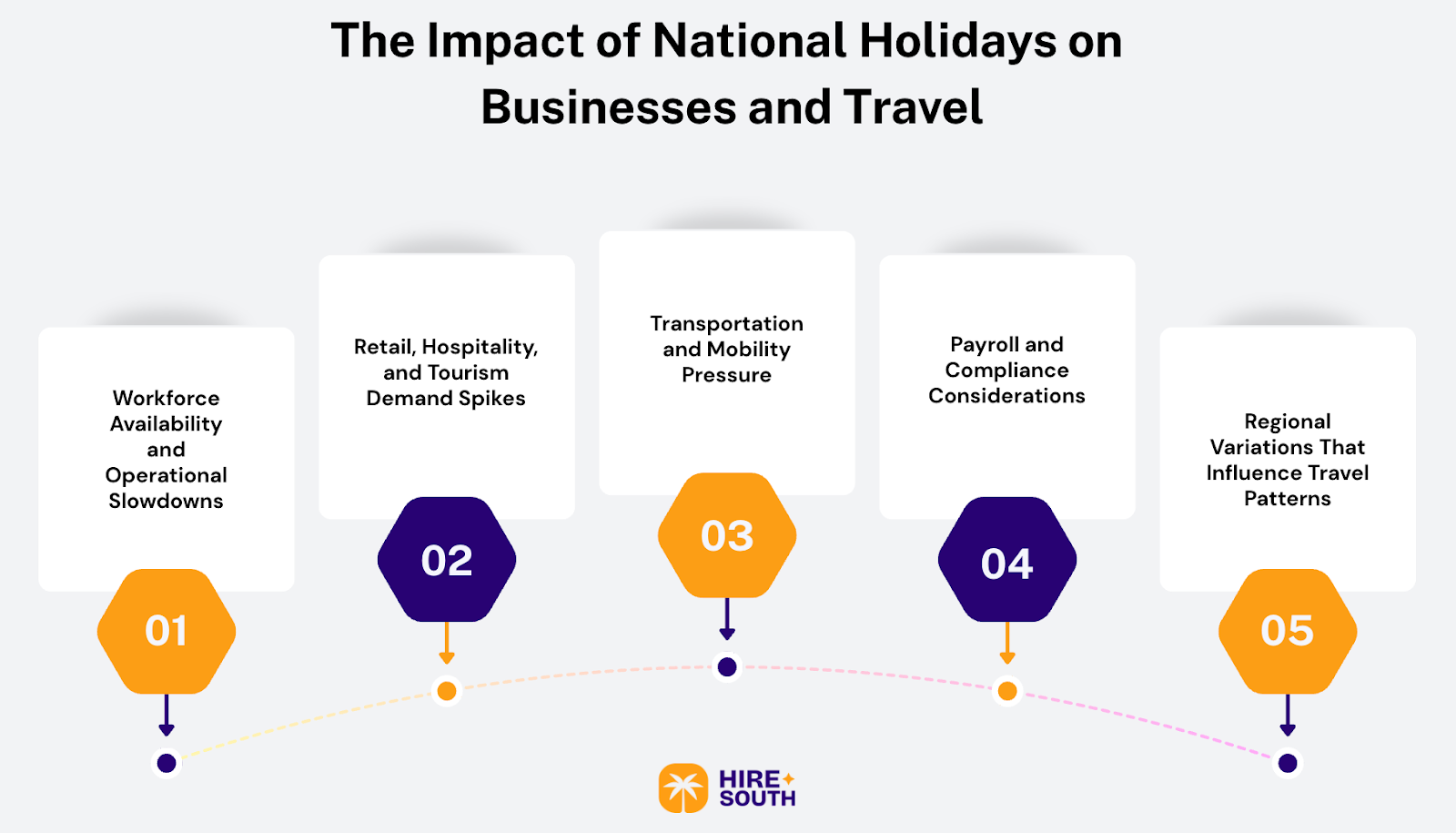
1. Workforce Availability and Operational Slowdowns
National holidays in Colombia create predictable productivity dips, especially during long weekends driven by the Emiliani Law. With 18 national public holidays each year, many companies experience reduced staffing levels and slower turnaround times. You’ll often see higher request volumes for paid leave adjacent to these dates, which can strain small teams or time-sensitive projects. Planning helps reduce bottlenecks, especially in industries with tight service windows.
2. Retail, Hospitality, and Tourism Demand Spikes
Holiday periods consistently reshape consumer behavior. According to the Ministry of Commerce, long-weekend travel generates some of the highest tourism revenues of the year, with major destinations reporting sharp increases in hotel occupancy and restaurant activity. For businesses in these sectors, demand surges can be substantial. For others, including B2B and corporate services, holiday periods typically bring quieter inboxes and extended decision-making timelines.
3. Transportation and Mobility Pressure
Mobility patterns shift dramatically during national holidays. Data from the National Transit Registry shows traffic increases of 20 to 30 percent on major intercity routes during long weekends, affecting delivery schedules, employee commutes, and logistics operations. Flights and bus routes also operate at higher capacity, sometimes selling out days in advance. If your operations depend on timely shipping or frequent client travel, these mobility spikes can reshape your planning.
4. Payroll and Compliance Considerations
National holidays are legally mandated non-working days, which means payroll obligations change. Under Colombian labor law, work performed during a public holiday must be compensated with a 75 percent wage surcharge, in addition to standard pay. This affects staffing decisions in retail, hospitality, logistics, and emergency services. If your business operates on a continuous schedule, building holiday rates into budget forecasts is essential to avoid compliance issues.
5. Regional Variations That Influence Travel Patterns
While national holidays apply uniformly, their impact differs by region. Coastal areas, the Coffee Axis, and cities like Medellín and Bogotá each experience unique activity spikes tied to local preferences and tourism patterns. These regional differences influence hotel pricing, transportation capacity, and the availability of local services. Understanding these dynamics helps you anticipate where congestion or limited availability may affect business travel or supply routes.
Ready to Start Nearshoring in Colombia?
At Hire South, we help companies build reliable nearshore teams that stay aligned with local labor regulations, country-specific holiday calendars, and regional work rhythms. Our experience in LATAM hiring ensures you get predictable support, consistent coverage, and staffing strategies built around the realities of Colombia and LATAM’s business landscape. If you are ready to start your journey, please make sure to schedule a free consultation today!